
Gravitational Waves
Reports on the detection and analysis of ripples in spacetime caused by massive cosmic events.
Ripples in the Fabric
As our sensitivity to the gravitational spectrum grows, the silence of the cosmos is being replaced by a complex, overlapping chorus of distant collisions.
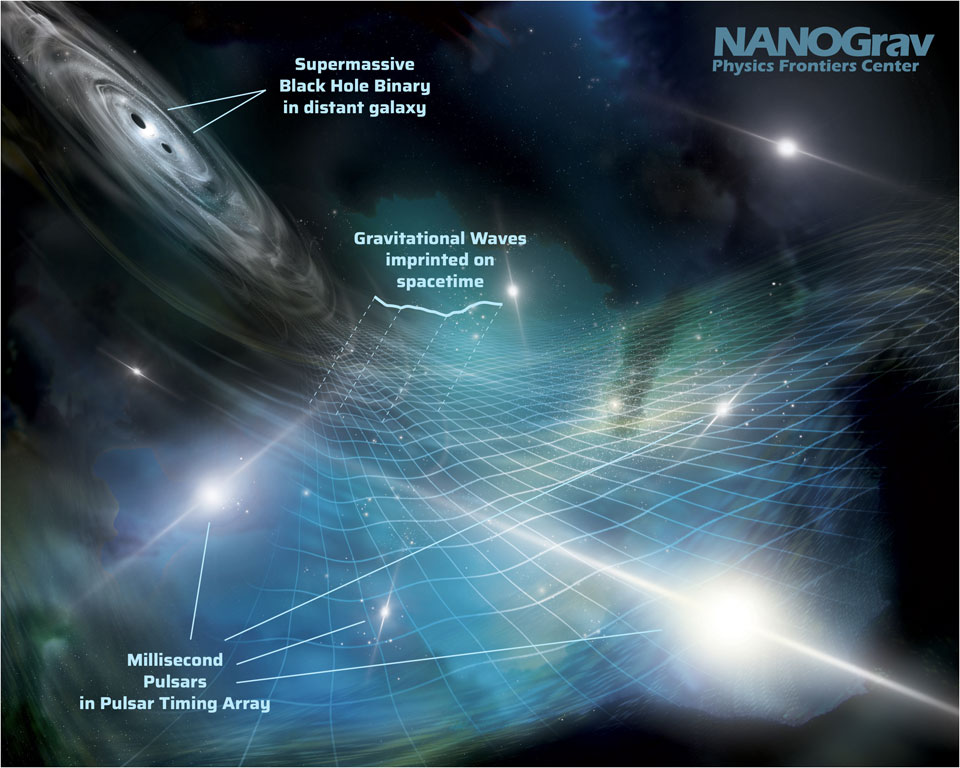
Spacetime Vibrations and Cosmic Observatories
Beyond the initial detection of black hole mergers, a new generation of observatories is beginning to map the subtle, complex vibrations of the universe.
Spacetime Ripples Reveal Complex Origins
As our ability to detect the ripples of spacetime improves, the challenge shifts from finding the signals to understanding their complex, often messy, origins.
Cosmic Signals and Model Noise
As our detectors grow more sensitive, the challenge lies not in hearing the universe, but in deciphering the static of our own models.
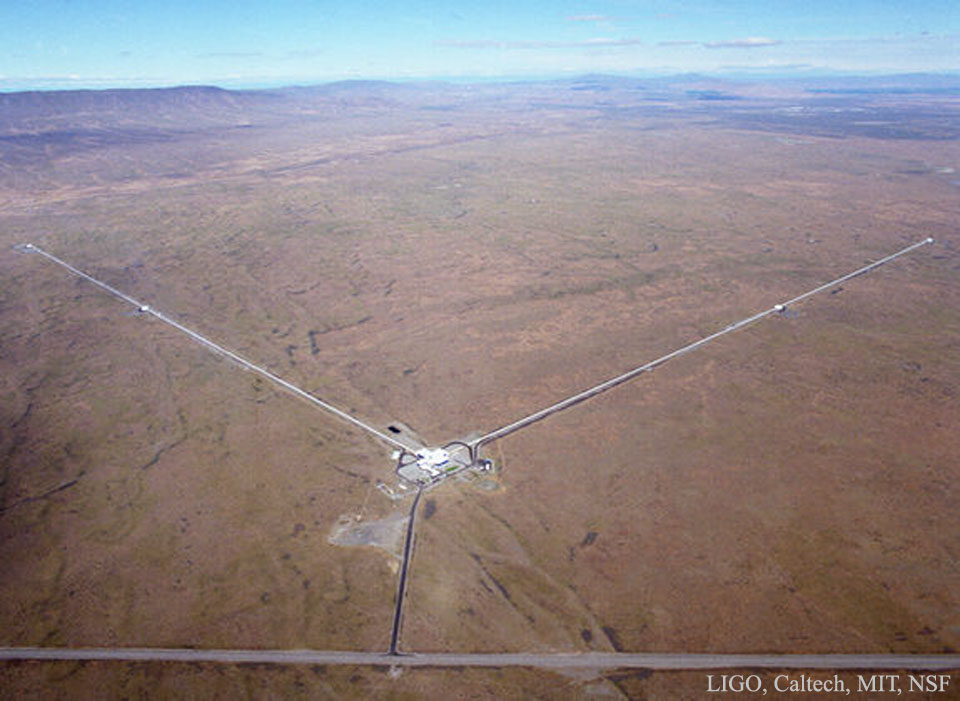
Echoes of the Invisible
As our sensitivity to the ripples of spacetime grows, the challenge shifts from merely hearing the universe to deciphering the noise within the signal.
Spacetime Signals and Theoretical Precision
As detector sensitivity reaches new heights, the challenge of interpreting the ripples of spacetime shifts from mere detection to the rigorous refinement of our theoretical models.
Gravitational Waveform Precision
As gravitational wave detectors reach unprecedented sensitivity, the struggle to interpret the data has moved from the hardware to the mathematics of the waveform itself.
Mathematical Precision in Detecting Spacetime Ripples
As our detectors grow more sensitive, the challenge of interpreting the faint ripples of spacetime lies in the accuracy of the mathematics we use to hear them.
Gravitational Waves Beyond Standard Models
As our sensitivity to gravitational waves improves, the subtle imperfections in our models reveal a universe far more complex than a simple, circular dance.
Gravitational Waves and Mathematical Precision
As our ability to detect gravitational waves matures, the precision of our mathematical models becomes the primary barrier to understanding the universe.
Gravitational Wave Textures in Modern Physics
As our detectors grow more sensitive, the subtle distortions in gravitational waves are revealing the hidden textures of the universe.