




Gravity and the Lifecycle of Stars
From the quiet rotation of a main-sequence star to the violent collapse of a white dwarf, the life of a star is a study in shifting balances.
Evidence in the Margins
Modern clinical research is less a march toward certainty than a persistent, iterative effort to manage the noise of human biology.
Small Particles, Large Consequences
The promise of manipulating matter at the scale of atoms is currently caught between rigorous engineering breakthroughs and a crisis of scientific integrity.
Cosmic Forces Shaping the Invisible Universe
From the quiet collapse of interstellar clouds to the violent signatures of dying stars, modern astrophysics maps the invisible mechanics of the cosmos.
American Labor: A History of Resistance
From the first printers' strike to the theater of the 1930s, the history of American labor is a record of resistance against the relentless pressure of capital.
Cosmic Calibration: Measuring the Infinite Sky
From the mechanical precision of nineteenth-century clocks to the digital refinement of modern satellite imagery, our understanding of the cosmos remains a pursuit of calibration.
Sept. 11, 2001: Orlando and Phyllis Rodriguez: “Not In Our Son’s Name”
Orlando and Phyllis Rodriguez. Photo from the film In Our Son’s Name . Orlando and Phyllis Rodriguez spoke out against using September 11, 2001 as a pretext for war. The Rodriguez’s son, Gregory, died when hijackers flew two planes into the World Trade Center. Gregory was thirty-one years old and working on the 103rd floor of one World Trade Center. The Rodriguez family sent this open letter to the New York Times and other papers after the attack. Our son Greg is among the many missing from the World Trade Center attack. Since we first heard the news, we have shared moments of grief, comfort, hope, despair, fond memories with his wife, the two families, our friends and neighbors, his loving colleagues at Cantor Fitzgerald/ESpeed, and all the grieving families that daily meet at the Pierre Hotel. We see our hurt and anger reflected among everybody we meet. We cannot pay attention to the daily flow of news about this disaster. But we read enough of the news to sense that our government is heading in the direction of violent revenge, with the prospect of sons, daughters, parents, friends in distant lands, dying, suffering, and nursing further grievances against us. It is not the way to go. It will not avenge our son’s death. Not in our son’s name. Our son died a victim of an inhuman ideology. Our actions should not serve the same purpose. Let us grieve. Let us reflect and pray. Let us think about a rational response that brings real peace and justice to our world. But let us not as a nation add to the inhumanity of our times. Film Clips Benjamin Bratt reads Orlando and Phyllis Rodriguez, “Not In Our Son’s Name” (September 15, 2001) from Voices of a People’s History on Vimeo . The Rodriguez’s letter, “Not In Our Son’s Name” (September 15, 2001), is read by Benjamin Bratt, February 1, 2007 at All Saints Church, Pasadena, Calif. The excerpt is from Voices of a People’s History of the United States edited by Howard Zinn and Anthony Arnove. More video clips can be found at the Voices of a People’s History website and in the film The People Speak . Watch the trailer for In Our Son’s Name below. See A Fateful Day: 9/11 Also Marks Important Anniversaries in India, Gua
Zinn Education Project · full entryCognitive Filters and Personal Perception
Our internal state acts as a filter for the world, but understanding the mechanics of that bias is the first step toward reclaiming our perception.

Cosmic Observation Through Data Synthesis
Modern observational astronomy relies less on the romantic notion of the lone stargazer and more on the patient, multi-instrumental orchestration of data across the electromagnetic spectrum.
Ripples in the Fabric
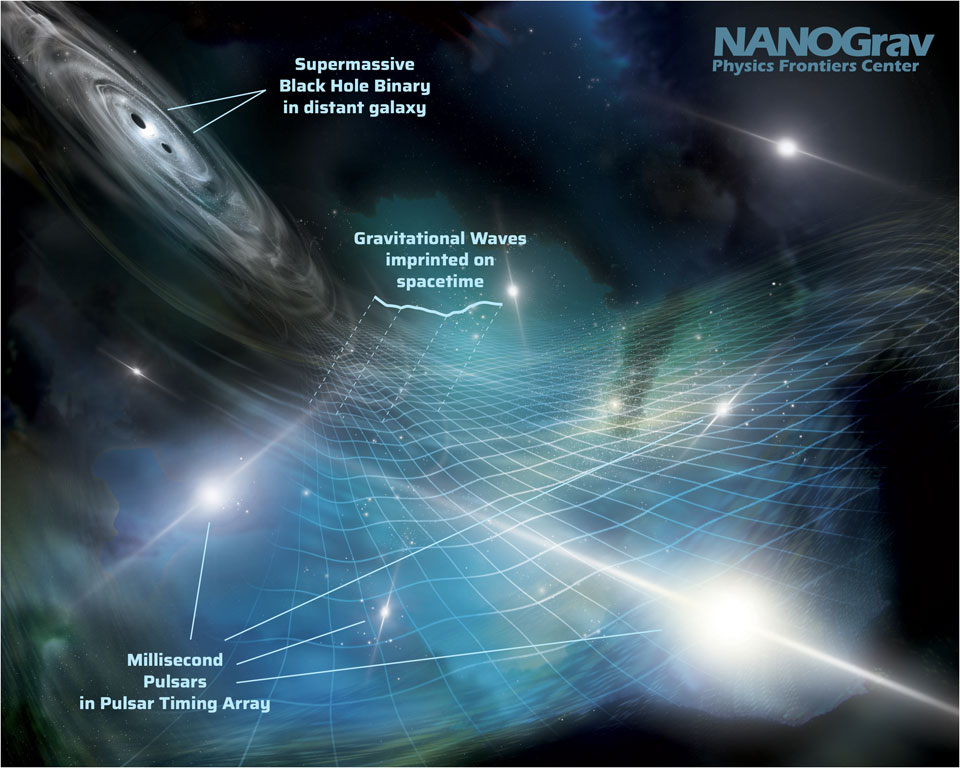
As our sensitivity to the gravitational spectrum grows, the silence of the cosmos is being replaced by a complex, overlapping chorus of distant collisions.
The history of cultural preservation is intimately tied to the history of the camera.from “Visual Preservation Across Eras” · read it
Image Persistence Across Digital and Physical Eras
From the precision of early glass-plate negatives to the expansive reach of the metaverse, our methods for capturing the past are as varied as the history they seek to preserve.

Applied Intelligence Systems for Modern Industry
As artificial intelligence matures, the focus shifts from raw computational power to the structural, verifiable, and collaborative systems required for real-world integration.
Molecular Records of Biological Systems
The biological interior is not a static blueprint but a restless, self-correcting system where memory, rhythm, and structural integrity are constantly negotiated at the molecular scale.

Machine Learning Calibration and Reliability
As machine learning moves from the laboratory into the field, the focus is shifting from raw predictive power to the rigorous demands of reliability, physical consistency, and honest evaluation.
Scientific Models Facing Data Anomalies
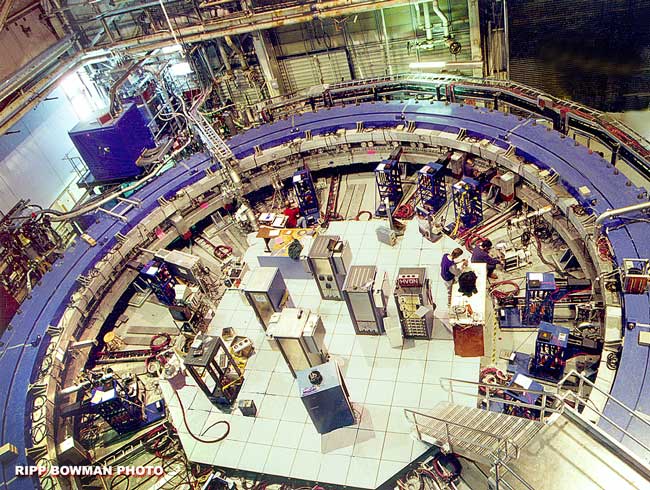
From the wobble of a muon to the oscillations of a neutron star, our most refined models are being tested by the very data they seek to explain.
Responsive Systems for Biological Repair
Modern medicine is moving away from passive replacement toward active, responsive systems that communicate with the body's own regenerative pathways.
Everything here began as cards in Learn's feed — real knowledge from museums, archives, journals, and the open web. Get the beta.
Precision Medicine Through Biological Engineering
Modern medicine is shifting from broad, blunt-force interventions toward a future of precision, biological engineering, and temporal awareness.
Regulatory Friction in Environmental Policy
Environmental policy struggles to reconcile the precision of scientific data with the messy, often contradictory demands of economic and social life.
Avian Observation Methods Across Two Centuries
From the meticulous sketches of the nineteenth century to the algorithmic precision of modern acoustic monitoring, the study of birds remains a pursuit of patience and technical ingenuity.

Measured Health Beyond Clinical Boundaries
Clinical research is moving from the controlled laboratory into the messy, unpredictable reality of daily life, forcing a rethink of how we capture and interpret human health.
A Census of Distant Wobbles
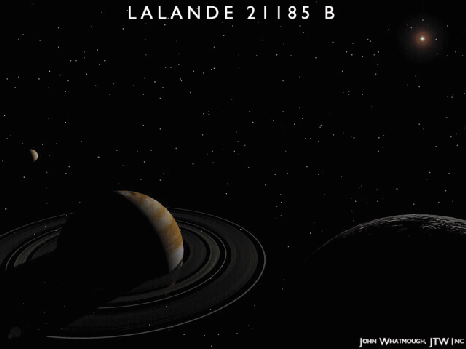
The census of worlds beyond our sun reveals a cosmos far more crowded and chaotic than our own quiet neighborhood.
Geometric Resilience and Material Constraints
From the geometric control of thermal stress to the digital policing of scientific integrity, the evolution of materials is a study in constraints.
Data in the Dark
Modern astrophysics is less about peering through a lens and more about managing the deluge of data from orbital sensors and complex simulations.

Computational Modeling Across Universal Scales
Across scales from the atomic nucleus to the cosmic web, computational modeling has become the primary lens through which we observe the otherwise invisible.
