
Invisible Forces Shaping the Cosmos
From the internal oscillations of neutron stars to the magnetic steering of solar winds, modern astrophysics is a study in the hidden forces that shape the cosmos.
Cosmic Geometry and the Expanding Void
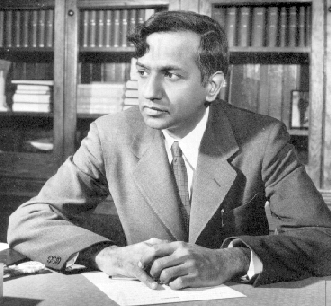
From the first flickering stars to the grand geometry of the void, our grasp of the cosmos remains a work of persistent, measured revision.
Tumors as Evolving Ecosystems
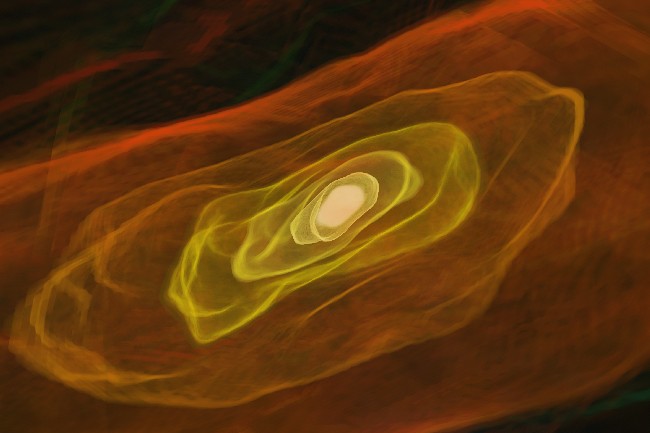
By treating cancer as an adaptive, evolutionary game rather than a static target, researchers are finding new ways to outmaneuver the disease.
Mental Health Metrics and Perception
From the digital architecture of our daily anxieties to the chemical frontiers of clinical relief, the landscape of mental health remains a complex negotiation between perception and biology.

Mapping the Heavens
From the telegraphic precision of the nineteenth century to the digital refinement of modern satellite data, the effort to map the heavens remains a struggle against noise.
Medical Correction Processes and Clinical Evolution
From the refinement of sepsis protocols to the emergence of AI-driven patient guidance, the landscape of medical research is defined by constant, critical revision.
Information Integrity in the Digital Age
The mechanisms by which we validate and store human inquiry are fracturing under the weight of industrial-scale fabrication and deep-seated geographic inequality.
Inquiry Methods and Rigor
Across disciplines, the pursuit of knowledge is increasingly defined not by the answers found, but by the rigor and transparency of the methods used to reach them.
Fragments, Genes, and Digital Ghosts
From the digital reconstruction of shattered monuments to the mapping of intangible cultural genes, we are fundamentally redefining how we hold onto the past.

Predictive Modeling in Practice
Across fields as disparate as astrophysics and emergency medicine, predictive modeling is shifting from a tool of simple extrapolation to a sophisticated, multi-layered practice of pattern recognition.
Signals in the Noise
From the limitations of wearable sensors to the complexities of remote therapy, the pursuit of clinical truth requires a constant reckoning with the imperfections of our data.
Avian Evolution Through Data and Drawing
From the meticulous sketches of the nineteenth century to the algorithmic precision of modern machine learning, our understanding of avian life remains a work in constant, shifting progress.

Planetary Transformation Across Distant Worlds
From the microscopic chemistry of distant clouds to the scarred surfaces of our own neighbors, planetary science reveals a universe defined by constant, often violent, transformation.
Hidden Order Through Geometric Models
Mathematical models act as lenses that sharpen our view of complex systems, from the evolution of tumors to the mechanics of gravity.
Paper Trails and Living Scripts
The transmission of human thought across centuries relies less on the permanence of ink than on the persistent, often quiet, labor of those who preserve, translate, and inhabit the texts of the past.
Paper Mills and the Ghost in the Machine
When the pursuit of academic output outpaces the rigors of truth, the scientific record begins to fray at the edges.
Cosmic Rhythms in Constant Flux
From the vibrations of neutron stars to the chemical evolution of protoplanetary discs, the physics of the cosmos is defined by constant, intricate change.
Mental Stability in a Digital Age
Modern mental health care is shifting from broad clinical interventions toward a more granular understanding of how technology, biology, and environment shape our internal stability.
Material Science and the Physics of Resilience
From the simulation of atomic structures to the management of thermal stress, the science of materials is a constant struggle to reconcile theoretical potential with physical reality.
Precision Tools Defining Cosmic Observation
From the mechanical precision of nineteenth-century clocks to the computational refinement of modern satellite imagery, our understanding of the universe is defined by the tools we use to observe it.
Grid Systems: Recalibrating Global Power
The transition to sustainable power is less a singular technological breakthrough than a complex recalibration of logistics, data, and local autonomy.
Nebulae: Cosmic Cycles of Stellar Life
Nebulae are the cosmic bookends of stellar life, marking both the violent birth of stars and the quiet, radiant exhaustion of their final acts.
Fragmented Pasts: Digital Curation and Cultural Memory
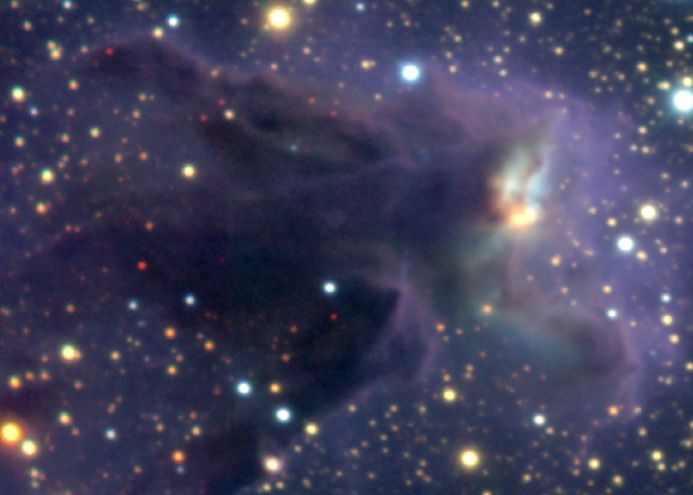
From the digital reconstruction of razed monuments to the mapping of intangible cultural genes, our relationship with the past is increasingly defined by how we capture, categorize, and curate it.

Data, Gaps, and the Search for Evidence
Modern clinical research is increasingly defined by the tension between the precision of digital tools and the messy, unpredictable nature of human health.
Hidden Variables in Automated Research
When researchers rely on automated tools and observational logs, the most dangerous variable is often the one they fail to notice.
Ornithology Methods and Observation
From the precision of digital classification to the intimacy of the field journal, the study of birds remains a pursuit of patience and evolving technology.
Precision Metrics Often Obscure Scientific Truth
A look at why the pursuit of raw accuracy in machine learning often misses the point of scientific inquiry.
Planetary Systems and Their Physical Foundations
From the chemical signatures of distant exoplanetary clouds to the isotopic history of meteorites, modern planetary science is redefining our understanding of how worlds are built and sustained.
Cellular Dynamics in Constant Adaptation
Modern biology increasingly views the cell not as a static unit, but as a dynamic, rhythmic entity that negotiates its survival through constant metabolic and temporal adaptation.

Computational Models of Inaccessible Systems
From the interior of the Earth to the surfaces of distant stars, computational models serve as the essential, if imperfect, lens through which we view the inaccessible.