Astrophysics
This section covers the physical properties and interactions of celestial bodies, systems, and phenomena throughout the universe.
Cosmic Forces Shaping the Invisible Universe
From the quiet collapse of interstellar clouds to the violent signatures of dying stars, modern astrophysics maps the invisible mechanics of the cosmos.

Invisible Forces Shaping the Cosmos
From the internal oscillations of neutron stars to the magnetic steering of solar winds, modern astrophysics is a study in the hidden forces that shape the cosmos.
Cosmic Rhythms in Constant Flux
From the vibrations of neutron stars to the chemical evolution of protoplanetary discs, the physics of the cosmos is defined by constant, intricate change.
Cosmic Forces Mapping Unseen Matter
From the collapse of stars to the birth of solar systems, modern astrophysics maps the unseen forces shaping the cosmos.
Invisible Forces Shaping Our Universe
From the collapse of stars to the birth of planetary systems, modern astrophysics maps the unseen forces shaping our universe.
Invisible Forces Shaping Our Universe
From the collapse of massive stars to the chemical evolution of planetary nurseries, our understanding of the universe is being refined by new tools and increasingly precise measurements.
Limits and Landscapes
From the collapse of stars to the expansion of the universe, modern astrophysics relies on the relentless refinement of mathematical models and observational precision.
Mapping the Invisible
From the microscopic chemistry of stellar nurseries to the large-scale geometry of the cosmos, modern astrophysics is refining its understanding of the invisible forces that shape our universe.
Cosmic Expansion Metrics and Modern Observations
Recent advances in observational data and statistical modeling are forcing a re-evaluation of how we measure the evolution of the cosmos.
Cosmic Mechanics Governing Infinite Expansion
From the collapse of stars to the expansion of the cosmos, modern astrophysics is refining the mathematical boundaries of the observable universe.
Cosmic Dynamics and Modern Astrophysical Precision
From the invisible filaments of dark matter to the turbulent atmospheres of red supergiants, modern astrophysics is refining our understanding of a universe that refuses to sit still.
Cosmic Expansion and Celestial Evolution
From the invisible filaments of dark matter to the violent birth of stars, modern astrophysics is refining our understanding of the universe's past and its accelerating expansion.
Signals from the Dark
From the recalibration of cosmic yardsticks to the turbulent surfaces of red supergiants, modern astrophysics is refining our understanding of a universe that is both predictable and profoundly dynamic.
Signals from the Dark
Modern astrophysics is moving beyond the comfort of static models to embrace a more volatile, evolving picture of the universe.
Cosmic Silence and the Standard Model
Recent observations confirm that our standard model of the universe remains remarkably resilient, even as we probe its most elusive corners.

Cosmic Shifts in the Expanding Universe
From the shifting nature of dark energy to the chemical signatures of newborn worlds, our understanding of the universe is undergoing a quiet, precise transformation.
Cosmic Invisible Forces Shaping Reality
Modern cosmology is less a study of solid objects and more a rigorous accounting of the invisible forces that dictate the shape of everything.
Cosmic Mechanics and Invisible Forces
Modern astrophysics is moving beyond the broad strokes of cosmic expansion to map the intricate, often invisible, mechanics that govern the life and death of everything from stars to entire galaxies.
Cosmic Expansion and the Standard Model
Recent observations of distant star formation and cosmic expansion suggest that the standard model of our universe remains a robust, if incomplete, framework.
Cosmic Mechanics and Hidden Universal Forces
Modern astrophysics increasingly relies on the tension between what we can measure with precision and what remains hidden in the dark.
Cosmic Rhythms and Invisible Structures
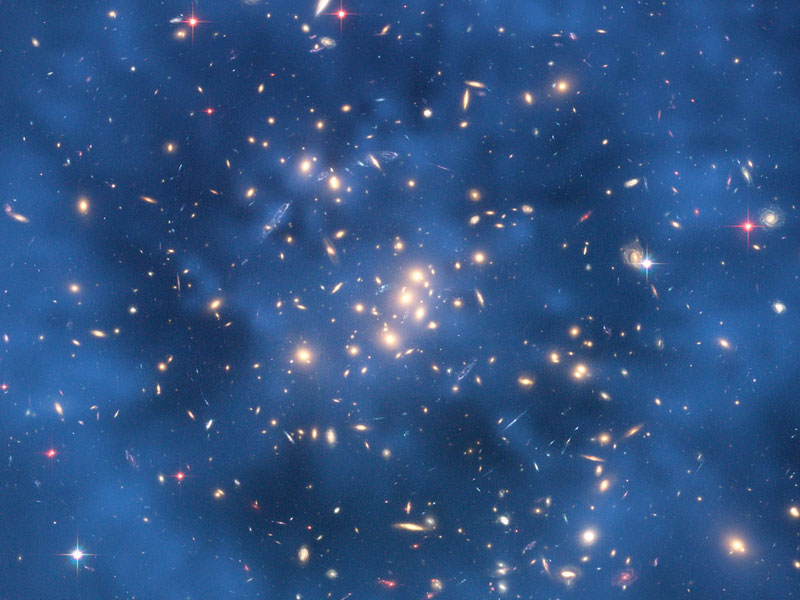
From the invisible ring of dark matter to the subtle vibrations of distant stars, current research reveals a universe defined by persistent, often hidden, structural rhythms.
Cosmic Mechanics and Stellar Evolution
From the invisible currents of dark matter to the chemical signatures of newborn stars, modern astrophysics is refining our understanding of a universe that is far more structured than it appears.
Echoes of the Invisible
Modern astrophysics increasingly relies on the subtle distortions of light and motion to map the hidden structures of the cosmos.
Cosmic Precision in Universal History
From the chemical signatures of the early universe to the subtle environmental biases of supernovae, our view of the heavens is becoming both more precise and more complex.
Cosmic Structures Mapped by Light and Motion
Modern astrophysics increasingly relies on the subtle distortions of light and motion to map the hidden structures of the cosmos.
Cosmic Scales and Hidden Structures
Modern astrophysics is less about peering at the unknown and more about refining the precision of our measurements to reveal the invisible mechanics of the universe.
Invisible Mass and Cosmic Distortions
From the densest neutron stars to the vast, unseen rings of dark matter, modern astrophysics is a study in inferring the nature of the universe through the subtle distortions left in its wake.
Invisible Forces Shaping Our Universe
From the density of neutron stars to the hidden architecture of dark matter, modern astrophysics seeks to map the unseen forces that govern our universe.
Invisible Forces Shaping the Cosmos
From the crushing density of neutron stars to the subtle influence of dark matter, modern astrophysics is a study in what we can infer when we cannot see.
Invisible Matter: Measuring the Cosmic Unknown
From the densest stellar cores to the dark matter shaping galaxy clusters, modern astrophysics is a study in how we measure what we cannot directly see.
Cosmic Physics and the Limits of Matter
From the stable foundations of the standard cosmological model to the violent, high-energy physics of neutron stars and black holes, our understanding of the universe is being refined by a focus on the granular details of environment and interaction.
Cosmic Mechanics and Invisible Forces
From the non-linear biases of supernovae to the plasma physics of black hole jets, the modern study of the cosmos is a pursuit of the invisible.
Invisible Forces Shaping Our Universe
From the crushing density of neutron stars to the subtle shifts in galactic light, modern observation reveals a universe defined by its hidden mechanics.

Cosmic Forces Driving Celestial Change
From the rain of helium in gas giants to the rapid growth of black holes in the early universe, the cosmos is defined by its constant, often violent, physical negotiations.
Cosmic Gravity and Invisible Mass
Modern astrophysics is less a study of light than an exercise in inferring the unseen through the subtle distortions of the cosmos.