Earth Records Deciphered
From the chemical stabilization of desert dunes to the isotopic secrets of iron meteorites, geology remains our most vital tool for deciphering the history of the planet.
The Science of Persistence
Geology is often mistaken for a static discipline, a study of rocks that sit stubbornly in place. In reality, it is a field defined by motion, transformation, and the persistent effort to read the history of the planet through its physical remnants. From the microscopic reactions that bind shifting sands to the isotopic signatures of meteorites that predate our own world, the study of the earth requires a synthesis of disparate scales. Whether tracing the structural folding of the Appalachian Mountains or mapping the delicate ecological shifts in the Dolomites, the geologist acts as both historian and detective, piecing together a narrative from fragments that have survived millions of years of erosion, pressure, and change.
The earth is a ledger of what has been, written in the language of chemistry and time.
Stabilizing the Shifting Surface
The challenge of understanding the earth is frequently one of access and preservation. In arid environments, the very ground is prone to redistribution; wind erosion can strip landscapes of their form, turning stable surfaces into ephemeral dunes. Recent engineering efforts have sought to combat this by inducing artificial chemical reactions, such as the creation of gypsum or brushite crusts, to lock loose calcareous particles in place. This is not merely an act of preservation but an attempt to impose a temporary stability on a naturally volatile system, demonstrating how human intervention now plays a role in the geological processes of the Anthropocene.
Fragments of the Early Solar System
Beyond our atmosphere, the same principles of chemical composition provide a window into the origins of the solar system. Meteorites recovered from the Antarctic ice serve as pristine, if weathered, capsules of early planetary history. By analyzing the isotopic anomalies within these iron meteorites, researchers have confirmed a fundamental dichotomy between non-carbonaceous and carbonaceous planetary bodies. These findings suggest that the building blocks of our solar system were not uniform, but rather derived from distinct reservoirs that accreted under varying conditions of heat and oxidation. Each fragment, whether it shows evidence of shock-induced melting or remains porous and fragile, tells a story of the chaotic collisions that shaped the early neighborhood of our sun.
The Observers and the Observed
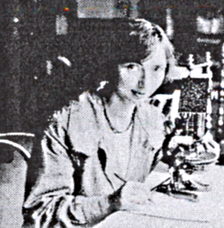
The history of the field itself is marked by those who pushed against the boundaries of their time to interpret these complex systems. Pioneers like Anna Jonas Stose and Silvia Zenari navigated professional landscapes that were often indifferent or hostile to their presence. Stose, through her meticulous mapping of the Appalachian Mountains, challenged existing interpretations of structural faults, often finding her work dismissed by contemporaries only to be vindicated by later technological advances. Similarly, Zenari bridged the gap between geology and botany, recognizing that the distribution of life is inextricably linked to the underlying mineralogical and altitudinal realities of the Dolomites. Their work underscores that the progress of science is as much about the persistence of the observer as it is about the evidence observed.
Seeing the Earth Whole
Today, our ability to monitor these processes has been transformed by remote sensing and data reconstruction. When satellite imagery is obscured by clouds or distorted by atmospheric adjacency effects, researchers now employ sophisticated mathematical models to recover the underlying data. This allows for a continuous, high-resolution view of land surface temperatures and water quality, providing the empirical backbone for modern hydrology and climate study. As we look at the petrified forests of Arizona or the deep, frozen permafrost of the north, we are reminded that geology is a living record. It is a dialogue between the ancient, petrified past and the high-resolution, digital present, where every grain of sand and every isotopic shift contributes to a more complete understanding of our world.