Gravitational Waveform Precision
As gravitational wave detectors reach unprecedented sensitivity, the struggle to interpret the data has moved from the hardware to the mathematics of the waveform itself.
The Geometry of Ripples
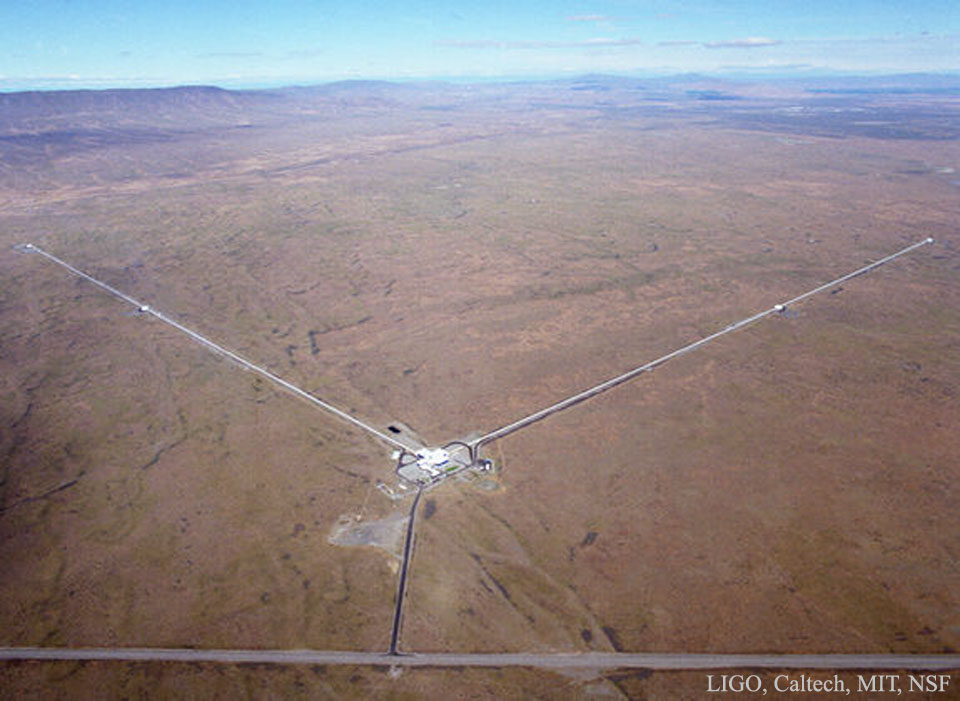
Accelerating a mass creates ripples in the fabric of the universe, a phenomenon predicted by general relativity and confirmed by the symmetric jiggle of detectors like LIGO. These gravitational waves act as a cosmic messenger, carrying information about the most violent events in the dark, such as the collision of black holes or the merger of neutron stars. Yet, as our observational capacity grows, the challenge shifts from mere detection to the rigorous interpretation of these signals. The precision of our instruments now demands a corresponding precision in the theoretical templates we use to identify what we hear.
Beyond the Tensor
The standard model of these waves relies on general relativity, which predicts two transverse tensor modes. However, alternative theories, such as nonmetric gravity, suggest that the universe may be more complex. In these frameworks, the presence of a boundary term can introduce a third, massive scalar mode. This additional degree of freedom would manifest as a distinct polarization, effectively adding a new layer of information to the gravitational signal. Whether these modes exist remains a primary question for those testing the limits of Einstein’s legacy.
The universe may be more complex than the standard model suggests, with additional modes of gravity waiting to be heard.
The Peril of Mismodeling
To extract physics from a signal, researchers compare incoming data against a library of pre-calculated waveforms. If the model is flawed, the inference is biased. Recent studies indicate that as detectors become more sensitive, current waveform models struggle to keep pace, particularly with systems involving high spin or extreme mass asymmetry. When these models fail to account for complex behaviors like spin precession or higher-order harmonics, the resulting estimates of black hole mass and spin become unreliable. This is not merely a technical nuisance; it threatens our ability to measure fundamental cosmological constants, such as the Hubble-Lemaître parameter.
Refining the Template
Improving these templates requires a delicate balance between analytical insight and numerical simulation. The effective-one-body approach, which uses resummed functions to describe the inspiral and merger, has seen significant refinement. By updating how logarithmic terms are handled, researchers have achieved a marked reduction in unfaithfulness between theoretical models and numerical relativity simulations. This progress is essential for the next generation of detectors, which will observe signals with higher signal-to-noise ratios and more intricate dynamics.
Precision in the theoretical template is the only barrier between a raw signal and a scientific discovery.
Automation and Synthesis
The future of the field lies in managing the sheer volume and complexity of incoming data. Machine learning is increasingly deployed to generate surrogate waveforms, speeding up the computationally expensive process of parameter estimation. Simultaneously, researchers are building probabilistic frameworks that link gravitational wave data directly to electromagnetic observations, such as the light curves of kilonovae. These tools allow us to bridge the gap between the invisible jiggle of spacetime and the visible glow of stellar debris, creating a comprehensive view of the cosmos that transcends any single medium.