Gravitational Waves Beyond Standard Models
As our sensitivity to gravitational waves improves, the subtle imperfections in our models reveal a universe far more complex than a simple, circular dance.
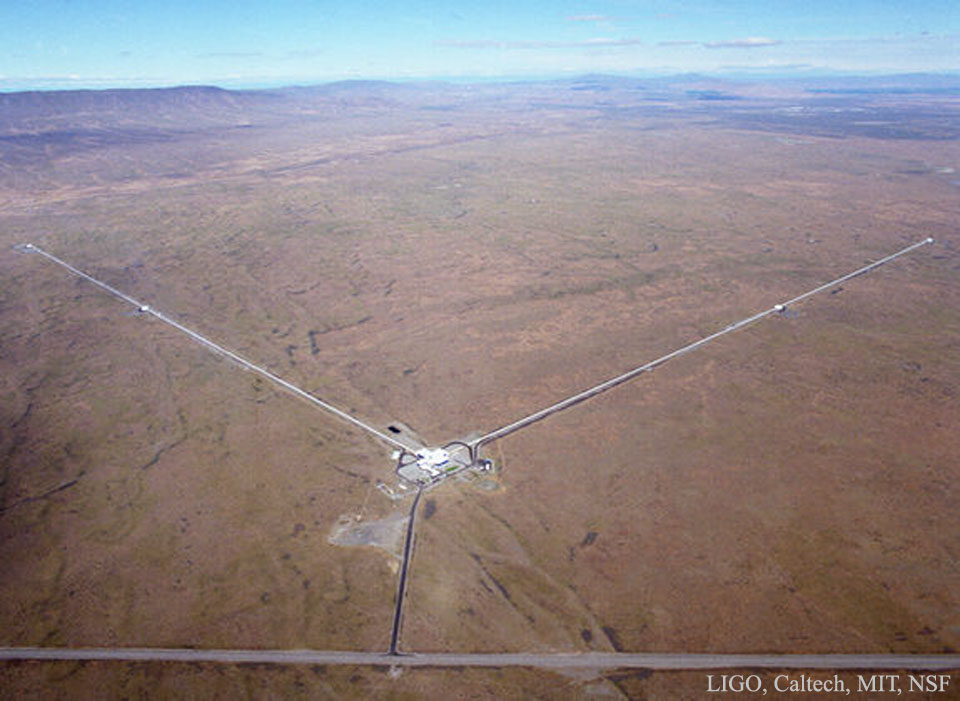
The Geometry of the Signal
When we observe the collision of two black holes, we are essentially listening for the final, frantic notes of a cosmic choir. For years, our detection templates relied on the assumption that these binary systems moved in near-perfect circles. However, this simplification is beginning to fray. As detectors reach higher levels of sensitivity, we find that many binaries formed in dense stellar environments retain a residual eccentricity, a slight wobble in their orbital path that alters the resulting gravitational wave signal. By incorporating these eccentric orbits into our waveform models, we gain a clearer picture of the event, preventing the significant loss of signal-to-noise ratios that occurs when we force a circular template onto a non-circular reality.
The assumption of perfect circularity is a convenience that the universe is increasingly unwilling to grant us.
Beyond the Standard Model
General relativity has served as our primary map for these events, yet it is not the only possible description of gravity. Alternative theories, such as nonmetric gravity, suggest that gravity might possess more than just the two standard tensor modes. These theories introduce additional scalar modes, effectively adding a new layer of sound to the gravitational spectrum. Whether these massive scalar waves exist remains a subject of intense scrutiny, as they would fundamentally change how we interpret the jiggle of our detectors. Similarly, the question of whether the graviton itself possesses mass continues to drive research, with every observation of a binary merger providing a new opportunity to place tighter bounds on the fundamental properties of gravity.
The Hidden Interior
The waves we detect are not merely products of orbital dynamics; they are also shaped by the physical nature of the objects themselves. For neutron stars, the internal state of matter—whether fluid or solid—leaves a distinct imprint on the gravitational waveform. If a star is solid, the accumulation of internal strain during an inspiral can lead to massive fracturing, a violent event that would be encoded in the phase of the emitted radiation. Detecting these signatures would allow us to move beyond simple mass and spin measurements, offering a way to probe the equation of state of dense matter in conditions that are impossible to replicate in any laboratory on Earth.
The internal state of a star is written into the rhythm of the waves it casts across the void.
Dark Timbre and Systematic Bias
As we refine our models, we must also confront the systematic biases that arise when our mathematical templates fail to match the true complexity of the source. High-spin binaries and asymmetric systems often elude the precision of current models, leading to errors in our estimates of mass and distance. Furthermore, the space between the source and the detector is not empty. Dark matter halos, though invisible, act as lenses for gravitational waves, creating stochastic distortions that act as a kind of dark timbre. By stacking data from numerous loud events, we may eventually distinguish these subtle fluctuations, turning the background noise of the universe into a tool for mapping the distribution of dark matter itself.