Spacetime Signals and Theoretical Precision
As detector sensitivity reaches new heights, the challenge of interpreting the ripples of spacetime shifts from mere detection to the rigorous refinement of our theoretical models.
The Burden of Accuracy
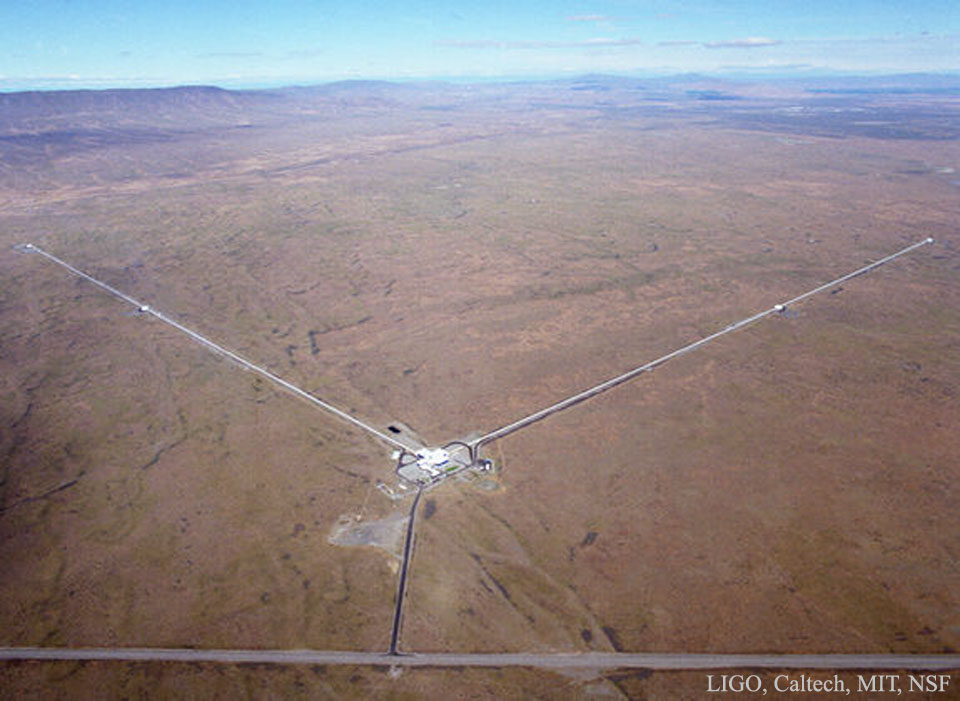
Gravitational-wave astronomy rests on a delicate act of translation. When two massive bodies coalesce, they warp the fabric of spacetime, sending ripples toward Earth that our detectors record as infinitesimal strains. To understand what occurred in the deep reaches of the cosmos, physicists must compare these recorded signals against theoretical templates. If the template is flawed, the inference is compromised. Current research indicates that as our detectors become more sensitive, the demand for waveform precision grows exponentially. Minor inaccuracies in modeling—such as neglecting the complex dance of spin precession or the subtle higher-order modes of a merger—can lead to systematic biases. These errors are not merely academic; they threaten to mislead our measurements of the Hubble-Lemaître parameter and obscure the physics of supernova formation. As we move toward third-generation detectors, the computational cost of generating these high-fidelity models has necessitated a turn toward machine-learning surrogates. While these tools offer a path to speed, they introduce their own inherent biases, requiring careful calibration to ensure that the resulting data remains tethered to physical reality.
The precision of our instruments has outpaced the fidelity of our translations.
Beyond the Standard Model
While general relativity has withstood every test, the search for gravitational-wave signatures beyond the Einsteinian framework continues. Recent theoretical work explores nonmetric gravity, a domain where the connection between points in space is not strictly tied to the metric. In these models, gravity is not merely a product of curvature but can involve additional scalar fields. Such theories predict a richer spectrum of gravitational radiation, including massive scalar modes that do not exist in standard general relativity. By analyzing the polarization of these waves—the specific way they stretch and squeeze the space they traverse—physicists hope to distinguish between competing descriptions of gravity. These three-polarization systems offer a potential window into the fundamental nature of the gravitational force, suggesting that the standard plus and cross modes we currently observe may be only part of a more complex narrative.
The Resonance Problem
The behavior of binary systems, particularly those involving extreme mass ratios, presents a formidable challenge to mathematical modeling. As a smaller object spirals into a massive black hole, its orbit can undergo transient resonances—moments where the orbital frequencies align in ways that complicate the waveform. Traditional methods of averaging out these rapid orbital cycles often fail at the point of resonance, where the underlying equations threaten to diverge. New approaches, such as treating the waveform as an observable within the framework of the Koopman operator, allow researchers to navigate these crossings without the mathematical singularities that once plagued the field. This level of precision is essential for future space-based detectors, which will track these systems over hundreds of thousands of orbits, capturing the fine details of strong-field gravity that remain hidden from our current ground-based instruments. Even seemingly small effects, such as spin-inversion degeneracies, require increasingly sophisticated waveforms to resolve, as the subtle differences between competing physical scenarios remain elusive under our current observational constraints.
The Search for Electromagnetic Echoes
The ultimate goal of many gravitational-wave studies is to pair a detection with an electromagnetic counterpart, such as a kilonova. These explosions, driven by the merger of neutron stars, provide a vital secondary window into the r-process nucleosynthesis that populates the universe with heavy elements. Despite the success of the Zwicky Transient Facility and other survey tools in coordinating follow-up observations, the search for these counterparts remains a difficult endeavor. The lack of detections in recent observing runs has forced astronomers to refine their expectations, favoring models of kilonovae that may be fainter than initially anticipated. To bridge this gap, new probabilistic frameworks are being developed to predict light curves directly from the posterior samples of gravitational-wave data. By integrating the uncertainties of the merger event with the physics of the ejecta, these models aim to provide a more robust guide for telescopes, ensuring that when the next signal arrives, the community is better prepared to catch the faint glow of the aftermath.
We are searching for a light that may not be there, or perhaps, one that has not yet been caught.