
Astrophysics Research
Peer-reviewed studies and data analysis concerning the physical properties and processes of celestial objects and the universe.
Data in the Dark
Modern astrophysics is less about peering through a lens and more about managing the deluge of data from orbital sensors and complex simulations.
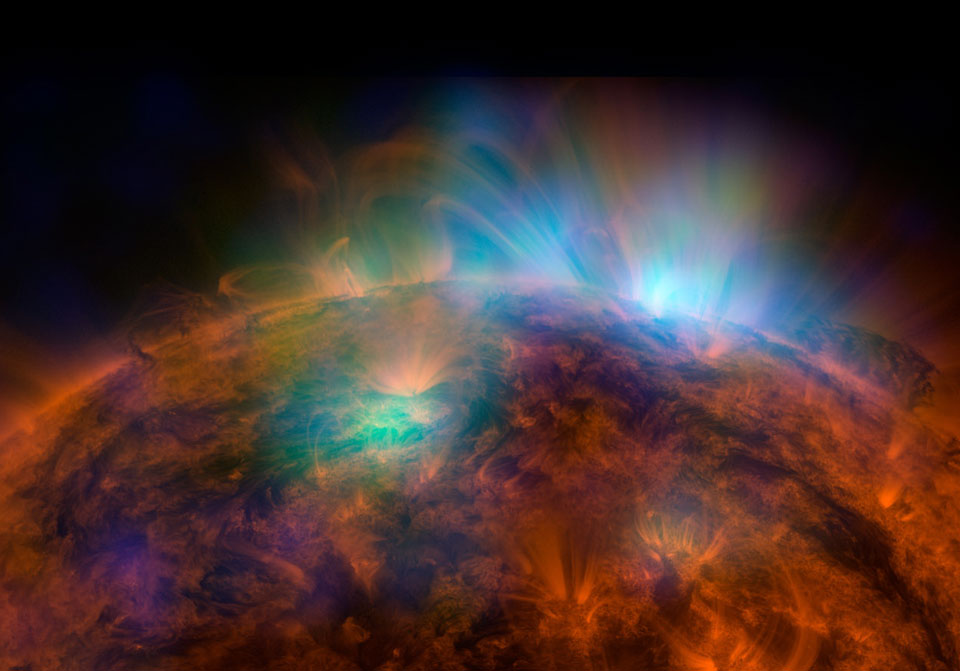
Signals from the Deep Field
From the magnetic heating of the solar corona to the gravitational echoes of early galaxy formation, modern astrophysics is refining its view of a dynamic and interconnected cosmos.
Dynamic Rhythms of a Restless Universe
From the flickering star formation of the early universe to the magnetic turbulence of our own sun, modern astrophysics is abandoning static models for a dynamic, time-sensitive view of the cosmos.
Cosmic Dynamics in Modern Observation
Recent advances in observational technology and computational modeling are revealing that galaxies and stars are far more dynamic, interconnected, and complex than previous models suggested.
Echoes of the Invisible
Modern astrophysics is less a matter of peering through a telescope than of interpreting the subtle, rhythmic tremors of the universe.
Signals from the Invisible
Modern astrophysics has moved beyond simple observation, relying on the interplay between high-resolution simulation and the precise, often messy, data harvested from the cosmos.
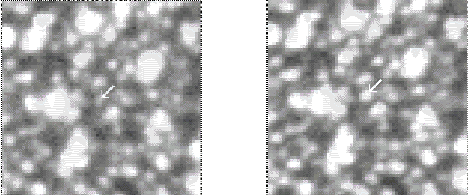
Cosmic Light and Galactic History
Modern astrophysics relies less on direct observation than on the sophisticated translation of light into the physical history of the cosmos.
Invisible Forces Shaping Stellar Evolution
Modern astrophysics is moving beyond simple observation to map the complex, unseen processes that govern the life and death of stars and galaxies.
Hidden Processes Governing Our Universe
From the flickering of distant galaxies to the echoes within a red giant's core, modern astrophysics is moving beyond simple observation to map the hidden processes that drive the universe.

Invisible Physics Governing Modern Astrophysics
Modern astrophysics is less about peering at distant lights than it is about decoding the complex, messy physics that governs the space between them.
Patterns in the Static and the Swirling
Modern astrophysics relies on a synthesis of high-resolution simulation, precise instrumentation, and the persistent re-evaluation of established cosmic models.
Precision Methods in Modern Astrophysics
Modern astrophysics is less a search for static truths than an exercise in refining the tools of observation to capture the fleeting, the distant, and the incredibly small.
Invisible Light and Cosmic Mechanics
Modern astrophysics has moved beyond simple observation, turning to complex statistical models and high-resolution instrumentation to map the unseen mechanics of the cosmos.
Astrophysics Volatility and Atmospheric Chaos
Modern astrophysics is moving away from broad, idealized models toward a granular, data-driven investigation of the volatile processes that shape our universe.