
Physics Confronts Cosmic Anomalies
Modern physics is currently grappling with the friction between our most precise mathematical models and the stubborn, often contradictory, signals arriving from the cosmos.
Inference Geometry
Data is rarely a mirror of reality; it is a construction, shaped by the methods we choose and the time we spend looking.
Material Limits and the Integrity of Inquiry
From the microscopic behavior of superalloys to the global trade of critical minerals, the pursuit of scientific precision is constantly tested by both physical limits and the fragility of the research record.
Cosmic Observation Through Technological Mediation
From the telegraphic precision of the nineteenth century to the algorithmic restoration of modern satellite data, our view of the universe is a product of constant mediation.
Digital Preservation of Cultural Heritage
From 19th-century glass plates to modern aerial algorithms, the effort to preserve the past is a constant struggle against the inevitable decay of time.

Rewriting the Code
From the molecular editing of human cells to the microbial management of soil, biotechnology is increasingly defined by our ability to read, write, and redirect the biological code.

Synthetic Agency and Systemic Control
As autonomous systems move from simple prediction to complex coordination, the focus of technical development shifts from raw processing power to the structures that govern memory, safety, and systemic interaction.
Signals from the Deep Field
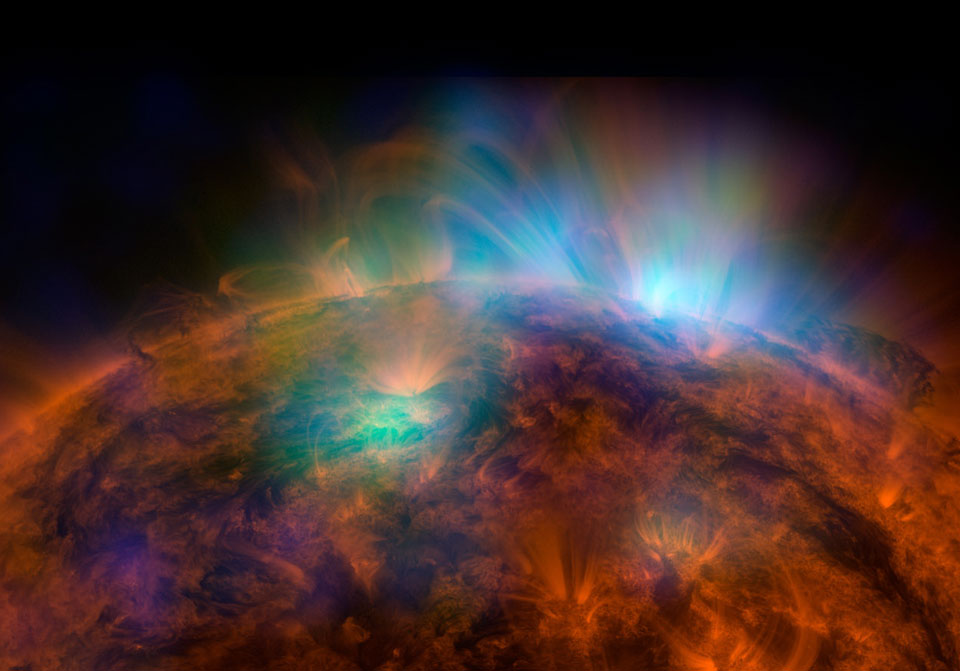
From the magnetic heating of the solar corona to the gravitational echoes of early galaxy formation, modern astrophysics is refining its view of a dynamic and interconnected cosmos.
Labor History and the American Struggle
From the first recorded strike in 1786 to the modern service industry, the history of American labor is a narrative of persistent struggle for dignity and collective power.
Computational Modeling and the Art of Reduction
Across disciplines, the art of computational modeling lies in knowing exactly which details to discard to make the truth visible.
Evidence in the Margins
The pursuit of medical certainty is a messy, iterative process that requires constant refinement of both our data and our ethical standards.
Cosmic Friction and Modern Physics
Modern cosmology is currently defined by a persistent friction between the elegant simplicity of our standard model and the stubborn, discordant signals arriving from the deep past.

Limits and Landscapes
From the collapse of stars to the expansion of the universe, modern astrophysics relies on the relentless refinement of mathematical models and observational precision.
Green Transition Dynamics
Across emerging economies and academic halls, the transition to a sustainable future is proving to be a complex, often contradictory, exercise in balancing growth with ecological survival.

Fragile Buffers and Systemic Risk
From the failure of warning labels to the unintended health consequences of climate intervention, the systems meant to protect us are often as fragile as the populations they serve.
Academic Fraud Within Medical Journals
A surge in industrial-scale academic fraud is forcing a reckoning for the journals that serve as the gatekeepers of medical truth.
Adaptive Cellular Systems
Modern biology increasingly views the cell not as a static unit, but as a fluid, adaptive system capable of profound internal reorganization in response to external stress.

Cellular Dynamics and Adaptive Memory
The internal life of a cell is not a static blueprint but a restless, adaptive network where memory, rhythm, and structural integrity are constantly negotiated.

Digital Mirages in Modern Research
As research methods evolve from the analog to the algorithmic, the challenge lies not in gathering more information, but in ensuring it is not a mirage.
Policy Metrics for Environmental Balance
Effective environmental policy requires balancing rigorous scientific observation with the economic and social realities of a changing world.
Digital Preservation of Vanishing Landscapes
As the physical world faces the constant erosion of time and conflict, our methods for preserving the past have moved from the glass-plate negative to the virtual simulation.

Biological Blueprints and the Limits of Control
From the microscopic navigation of biohybrids to the correction of genetic code, biotechnology increasingly seeks to master the mechanics of life.
Dynamic Rhythms of a Restless Universe
From the flickering star formation of the early universe to the magnetic turbulence of our own sun, modern astrophysics is abandoning static models for a dynamic, time-sensitive view of the cosmos.
Systems in Flux
Cancer research is shifting away from static models toward an understanding of tumors as adaptive, rhythmic, and environment-dependent entities.
Signal clarity in celestial observation
From the mechanical precision of nineteenth-century observatories to the digital noise of modern satellite constellations, the act of watching the sky has always been a struggle to isolate signal from interference.
Precision Rhythms in Modern Medical Practice
From the precision of circadian dosing to the promise of bioprinted tissue, modern medicine is increasingly defined by the marriage of biological insight and computational speed.
Stellar Evolution and Universal Chemical Cycles
From the quiet cooling of white dwarfs to the violent collapse of magnetized cores, the life cycles of stars define the chemical and structural evolution of the universe.
Scientific Inquiry and Its Ethical Constraints
The integrity of scientific inquiry rests on more than just the pursuit of truth; it requires a rigorous adherence to the boundaries of consent, measurement, and transparency.
Paper Trails and Power Structures
The systems we use to circulate knowledge are not neutral, and they often obscure the very expertise they claim to amplify.
Clinical Data Refinement in Healthcare Systems
From the rigors of meta-analysis to the necessity of correcting the scientific record, clinical research is a persistent, imperfect effort to turn raw data into reliable care.