Models Versus Physical Reality
From the mechanics of sleep to the birth of stars, our understanding of the universe relies on the fragile bridge between physical reality and mathematical abstraction.
The Persistence of Frameworks
Scientific inquiry often begins not with a discovery, but with the construction of a container for thought. The two-process model of sleep, formulated over four decades ago, remains a cornerstone of sleep science because it successfully partitioned a complex biological phenomenon into two manageable variables: a homeostatic drive for rest and a circadian pacemaker. This separation allowed researchers to move beyond mere observation and into predictive testing.
This impulse to simplify is as old as engineering itself. In the late 1960s, designers at Convair used modular, reconfigurable wind tunnel models to test the aerodynamics of potential space shuttle designs. By stripping away the complexity of a full-scale vehicle to focus on specific variables like wing shape or tail orientation, they created a physical model that served the same purpose as a mathematical one: it allowed for the isolation of variables in a controlled environment, proving that the most effective way to understand a system is to build a smaller, more manageable version of it.
A model is a disciplined way of ignoring the noise to hear the signal.
The Limits of Resolution
Even the most robust models eventually encounter the friction of reality. In the Pearl River Delta, researchers attempting to map ozone production found that while their chemical models were largely accurate, they consistently underestimated production rates under high-nitrogen conditions. This discrepancy suggested that the model was missing a specific, subtle pathway involving reactive oxygen species. The model was not wrong, but it was incomplete.
Similarly, in the study of massive star-forming regions like RCW 120, chemical models struggle to account for the complex interplay between gas-phase reactions and the icy mantles of dust grains. When observations of methanol abundance failed to align with standard predictions, researchers had to refine their simulations to include photodesorption—the process by which light knocks molecules off dust surfaces. In both cases, the model acted as a diagnostic tool; its failure to match reality pointed precisely toward the missing physical mechanism.
Chemical Chaos and Stellar Birth
When we look to the early universe, the challenge shifts from local chemistry to the grand, sweeping evolution of galaxies. Modern cosmological simulations, such as those using the James Webb Space Telescope’s spectroscopic data, attempt to reconcile the mass-metallicity relation—the observed link between a galaxy's mass and its chemical composition. Researchers have found that if the rate of star formation is too erratic, or 'flickering,' the resulting chemical distribution becomes chaotic, effectively destroying the patterns we observe.
This sensitivity highlights a recurring tension in modeling: the balance between universal rules and local variation. By incorporating an environment-dependent initial mass function, scientists can now produce more accurate estimates of stellar mass and star formation rates. These models acknowledge that a galaxy is not a static object governed by a single, universal law, but a dynamic system where the environment dictates the outcome.
Stochasticity is the enemy of the tidy equation.
The Hybrid Future
The current frontier of modeling lies in the marriage of pure data-driven artificial intelligence and the rigid constraints of physical law. Physics-Informed Neural Networks (PINNs) represent a significant departure from traditional 'black box' machine learning. By embedding physical equations directly into the loss function of a neural network, researchers can ensure that the model’s predictions remain tethered to reality, even when data is sparse or noisy. This approach has proven effective in fields as disparate as agricultural water management in Morocco and the analysis of solar X-ray emissions from the Solar Orbiter.
In theoretical physics, this same rigor is applied to dark energy models like 'freezing gravity.' By analyzing cosmological perturbations, researchers can determine the conditions under which these models remain stable. Whether we are calibrating an X-ray spectrometer or predicting the behavior of phantom dark energy, the goal remains the same: to create a mathematical structure that is flexible enough to learn from data, yet rigid enough to obey the fundamental laws of the universe.
The Ghost in the Machine
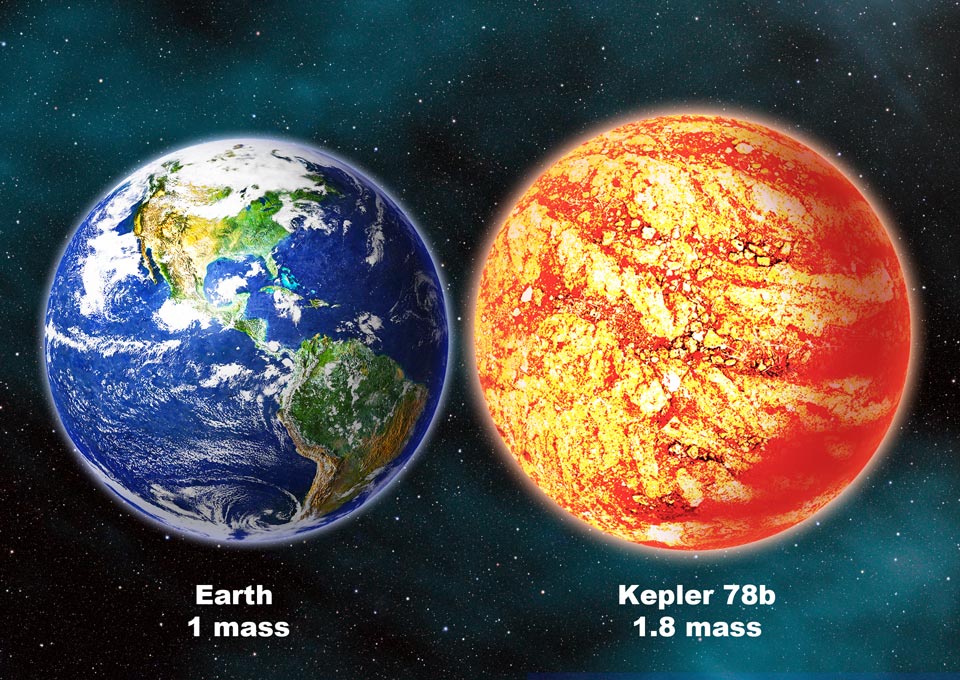
Sometimes, a model reveals that our intuition about what is possible is simply too narrow. The discovery of Kepler-78b, an Earth-sized planet orbiting so close to its star that rock should be liquid, challenged existing formation models that insisted such a world could not exist. The planet forced a recalibration of our understanding of planetary migration and survival.
In the realm of theoretical gravity, similar revisions occur. For years, researchers assumed that traversable wormholes in certain dimensions required specific, restrictive conditions. Recent work has shown that these restrictions were merely artifacts of a limited choice of mathematical Lagrangian. By removing these artificial constraints, the models revealed a much richer, more varied set of possibilities. It is a reminder that the most profound insights often come not from the data itself, but from the realization that our models were imposing limits that nature never intended.