Worlds Beyond the Familiar
As our detection methods sharpen, the galaxy reveals itself not as a collection of anomalies, but as a crowded, diverse, and often surprising neighborhood.
The Search for a Mirror
For decades, the hunt for planets beyond our own was driven by a singular, quiet desperation: to find something that looked like home. Early discoveries often felt like cosmic anomalies, featuring massive gas giants that swung in tight, erratic orbits around their parent stars. These systems, while scientifically significant, bore little resemblance to the orderly arrangement of our own neighborhood. They were chaotic, disruptive, and fundamentally alien.
Yet, the steady accumulation of data has begun to soften those edges. When astronomers identified systems like HD70642 or 55 Cancri, the tone of the conversation shifted. These findings suggested that the architecture of our solar system—with its stable, circular orbits and distant giants—might not be a lonely exception in the galaxy. We are no longer merely cataloging oddities; we are mapping a neighborhood that occasionally looks back at us with a familiar face.
We look for the familiar not because it is common, but because it provides a baseline for our own existence.
The Impossible Neighbors
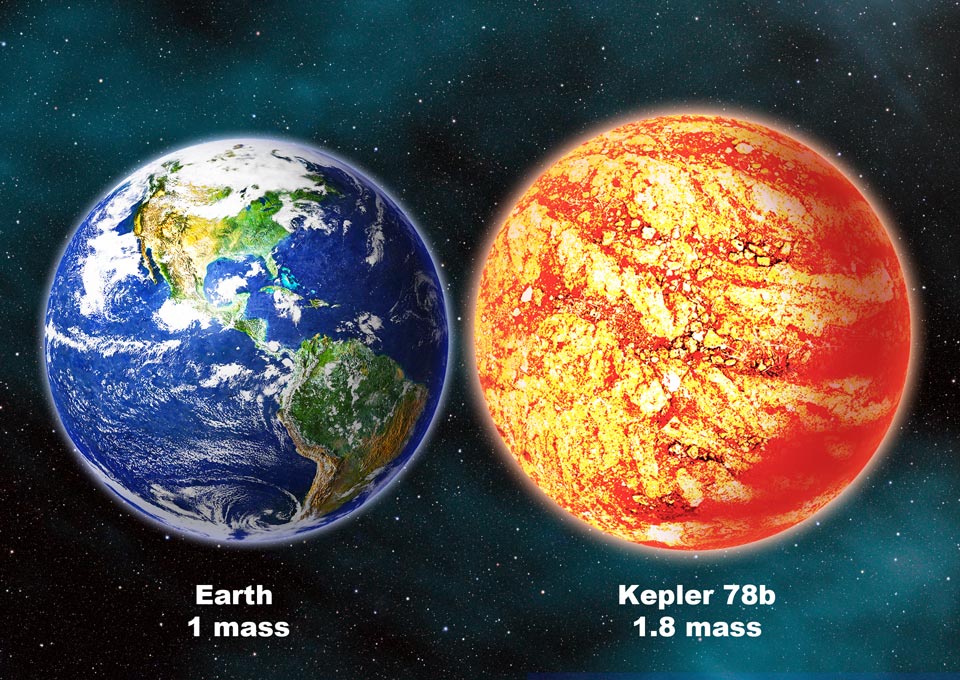
Not every world fits neatly into the tidy boxes of planetary formation theory. Consider Kepler-78b, a planet that, by all rights, should not exist. It is roughly Earth-sized, yet it clings to its star at a distance so intimate that the very rock of its surface would be rendered liquid by the heat. It is a world that defies the standard models of how planets coalesce, and it is destined to be consumed by its host star as its orbit inevitably decays.
This theme of the extreme is echoed in the recent discoveries of planets like GJ 806 b and HD 260655 b. These worlds complete their orbits in mere hours or a few days, racing around red dwarf stars in a state of perpetual, searing heat. They remind us that the universe is not obligated to provide environments conducive to life as we understand it. Instead, it offers a vast spectrum of physical states, many of which push the boundaries of what we consider a planet to be.
The Quiet Complexity of Orange Dwarfs
The GJ 414 A system provides a more nuanced view of how planets arrange themselves. Here, two distinct worlds orbit an orange dwarf star, each occupying a different niche. One planet is a heavy, cold giant, while its sibling is a smaller, warmer world that sits closer to the star. Their existence, confirmed through the subtle radial-velocity wobbles they induce in their host, highlights the complexity that can emerge even in systems that do not mirror our own.
These orange dwarf systems serve as a bridge between the extremes of red dwarfs and the familiarity of our own Sun. They offer a middle ground where planetary evolution can take a different path, resulting in configurations that are neither entirely alien nor perfectly domestic. By studying these systems, we gain a better understanding of the variables that dictate whether a planet remains a stable, long-term resident of its star or a fleeting visitor destined for destruction.
The diversity of planetary systems suggests that the conditions for stability are far more varied than we once dared to imagine.
A Statistical Certainty
The shift from finding a single planet to understanding the prevalence of planetary systems has been profound. We have moved from the era of 'is there anything out there?' to a statistical reality where we can estimate that a significant portion of Sun-like stars host Earth-sized planets within their habitable zones. This realization does not necessarily imply the presence of life, but it does confirm that the raw materials for such a possibility are distributed with surprising generosity throughout the galaxy.
As we refine our methods—moving from the early days of detecting massive wobbles to the precise transit observations of today—the picture becomes clearer. We are finding that the galaxy is crowded with worlds, many of which are small, rocky, and potentially temperate. The search has evolved from a hunt for rare treasures into a systematic survey of a vast, populated landscape, where the sheer number of candidates suggests that our own solar system is merely one variation on a very common theme.