Beyond the Familiar Horizon
The search for worlds beyond our own has shifted from finding the exceptional to mapping the common, revealing a cosmos far more diverse than our local neighborhood suggests.
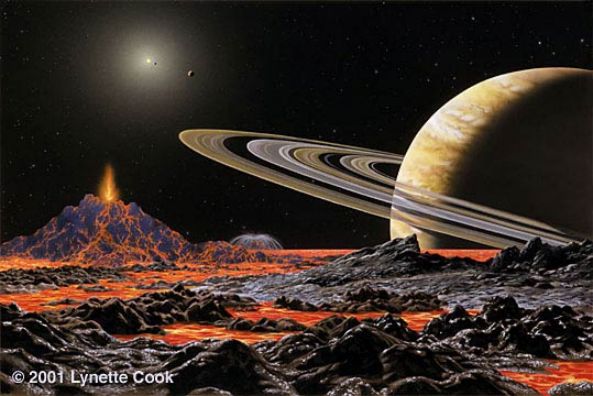
The Bias of the First Look
For much of the late twentieth century, the hunt for exoplanets was defined by a quiet anxiety. We looked at the sky and saw a singular arrangement: a stable, sun-like star hosting a neat sequence of planets in nearly circular orbits. When early discoveries began to emerge, they were almost exclusively defiant of this template. We found gas giants hugging their parent stars in tight, blistering orbits or worlds tracing wildly elongated paths through space. These early findings suggested that our own Solar System might be a statistical outlier, a rare configuration in a galaxy prone to chaos.
We looked at the sky and saw a singular arrangement, yet the early discoveries were almost exclusively defiant of this template.
A Census of the Galaxy
The arrival of the Kepler mission in 2009 fundamentally altered the scale of our curiosity. By monitoring vast star fields for the subtle dimming caused by planetary transits, the mission moved the field from individual detective work to a census of the galaxy. Thousands of candidates emerged, revealing that planetary systems are not merely common; they are ubiquitous. This shift allowed astronomers to stop viewing every new world as a bizarre anomaly and start categorizing the sheer variety of planetary configurations, from rocky super-Earths to systems with multiple, tightly packed orbits.
The Mechanics of Distant Worlds
Modern detection methods—radial velocity and transit photometry—have become so refined that we can now resolve the specific mechanics of distant systems. In the GJ 414 A system, for instance, we see two distinct worlds orbiting an orange dwarf, each with its own mass and temperature profile. Similarly, the discovery of GJ 806 b and HD 260655 b highlights the prevalence of short-period planets orbiting red dwarfs. These findings are not just data points; they are the building blocks of a new taxonomy that accounts for the physical realities of worlds that are often vastly different from Earth.
Breaking the Plane
As our observational tools sharpen, we have begun to question the assumptions of symmetry that once governed our models. The HR 8799 system, studied through advanced coronagraphy and adaptive optics, serves as a case in point. By analyzing the orbital motion of its four substellar companions, researchers have found evidence of misalignment that challenges the notion of strictly coplanar systems. This suggests that the history of a planetary system is often written in its dynamical instability, where the gravitational interactions between bodies can force them out of the neat, flat planes we once expected to see.
The history of a planetary system is often written in its dynamical instability, where gravitational interactions force worlds out of the neat, flat planes we once expected.
Listening to the Spillover
The ultimate ambition of this work is to move beyond mere detection toward a search for meaning. The TRAPPIST-1 system, with its tightly packed, low-inclination planets, offers a unique laboratory for this. By observing planet-planet occultations—moments when one world passes in front of another from our perspective—researchers are now scanning for radio signals that might spill over between them. While recent searches have yielded no evidence of nonhuman origin, the effort represents a transition in the field: we are no longer just asking if planets exist, but whether the conditions they create might support something more.