A Census of Distant Wobbles
The census of worlds beyond our sun reveals a cosmos far more crowded and chaotic than our own quiet neighborhood.
The Gravity of Inference
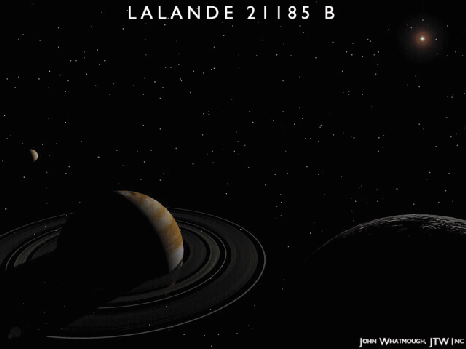
For decades, the search for planets outside our solar system was a game of shadows. We could not see the worlds themselves, only the subtle, rhythmic tugging they exerted on their parent stars. By tracking the minute gravitational wobbles of a star like Lalande 21185, astronomers inferred the presence of massive, unseen companions. This radial-velocity method turned the stars into beacons of their own hidden systems, revealing that even the dimmest red dwarfs might host large, Jupiter-like planets. What began as a statistical whisper has since matured into a robust catalog of planetary neighbors.
The stars act as beacons, their rhythmic wobbles betraying the presence of hidden worlds.
Shadows in the Light
Modern technology has shifted the focus from gravitational tugs to the literal dimming of starlight. When a planet passes directly in front of its sun, it creates a transit—a momentary dip in brightness that the Transiting Exoplanet Survey Satellite records with precision. This method has brought us closer to home, identifying rocky, Earth-sized worlds like GJ 806 b and HD 260655 b. These planets are often found in tight, scorching orbits, racing around their stars in a matter of hours or days, far removed from the temperate stability of our own planetary home.
The Improbable Orbit
Nature, it seems, possesses a penchant for the improbable. Consider Kepler-78b, a planet that defies the prevailing models of formation. Roughly the size of Earth, it circles its star at a distance so close that its surface would be molten rock. Such a world should not exist according to our current understanding of how planets coalesce and evolve. Its presence serves as a reminder that our theories are often too tidy for a universe that frequently produces the impossible.
Our theories are often too tidy for a universe that frequently produces the impossible.
Echoes of Home
Not every system is a chaotic scramble of scorched rock. The discovery of HD70642 offered a rare sense of familiarity. With a massive planet in a nearly circular orbit, the system leaves room for smaller, potentially habitable worlds to exist further inward. It is a configuration that mirrors our own solar system, providing a template for what we might consider a stable, hospitable neighborhood. At 90 light-years away, it remains a distant cousin to our own sun, a reminder that the conditions for life may be more than a local anomaly.
Ancient Neighbors
The search extends even into the ancient, crowded cores of globular clusters. In Messier 4, a dense collection of 100,000 stars, astronomers have identified an exoplanet orbiting a pulsar. These environments are vastly different from the quiet outskirts of the galaxy where our sun resides. By looking into these ancient stellar nurseries, we find that planets are not merely the products of isolated, sun-like systems; they are a persistent feature of the galaxy, appearing even in the most tightly packed and turbulent stellar environments.