Scientific Models Facing Data Anomalies
From the wobble of a muon to the oscillations of a neutron star, our most refined models are being tested by the very data they seek to explain.
Shadows of the Standard Model
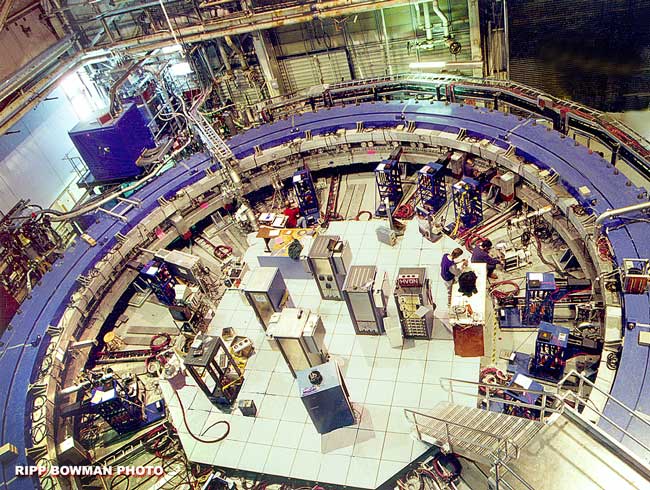
For decades, the standard model of cosmology and particle physics has functioned as a remarkably durable scaffolding, supporting our understanding of everything from the inflationary birth of the universe to the subatomic dance of muons. Yet, this framework is increasingly showing signs of strain. Discrepancies in the measurement of core cosmological parameters suggest that our current description of the cosmos may be incomplete. When the observed wobble of a muon deviates from theoretical predictions, it hints at a hidden sea of virtual particles, potentially pointing toward supersymmetry or other physics beyond our current reach. These tensions are not merely statistical noise; they are the cracks through which we might glimpse a more profound reality.
The friction between our mathematical models and the raw data of the universe is where the next generation of physics begins.
The Geometry of the Invisible
In the study of compact objects like neutron stars and black holes, theoretical physics relies on the elegance of differential equations to describe extreme environments. By analyzing the oscillations of neutron stars, researchers have found that even complex, anisotropic systems obey universal relations that remain consistent across a wide range of equations of state. These relations, which link observables like tidal deformability to the star's internal structure, act as a bridge between surface-level measurements and the deep-interior physics of dense matter.
Similarly, the mathematical exploration of black-bounce spacetimes—geometries that interpolate between regular black holes and traversable wormholes—reveals how subtle changes in the underlying geometry can leave distinct imprints on gravitational wave spectra. By computing quasinormal modes, physicists can distinguish between singular and regular configurations, providing a potential roadmap for future observations to test the limits of general relativity.
Simulating the Unseen
Bridging the gap between abstract theory and observational data requires sophisticated simulations that can handle the messy reality of cosmic evolution. In the context of black hole dynamics, new sub-resolution prescriptions for dynamical friction are helping to correct for numerical artifacts that previously obscured the true behavior of these objects. By accurately modeling how black holes orbit and merge within their host galaxies, these simulations provide a clearer picture of the demographic evolution of the universe.
Meanwhile, in the early universe, inflationary models like those of Starobinsky and Higgs are being rigorously tested against data from the Atacama Cosmology Telescope. By using Bayesian inference to map the parameter space of reheating, researchers are narrowing the window of viable theories. While some models face pressure from new data, the flexibility of these frameworks ensures that they remain central to our attempts to reconstruct the first moments of time.
The Stochastic Frontier
As we push toward more precise control over quantum systems, the distinction between classical and quantum noise becomes increasingly blurred. Modern frameworks now treat the wave function and classical variables as components of a unified stochastic process, allowing for a Bayesian approach to hybrid dynamics. This method not only simplifies the description of open quantum systems but also provides powerful tools for state estimation and error correction.
By mixing amplitude-damping and anti-damping channels, physicists are engineering dynamics that transcend standard thermal models. Whether by tuning between unital and non-unital regimes or applying Bayesian filtering to hidden quantum-classical trajectories, these techniques are essential for the next generation of quantum information processing. In this domain, the focus is less on finding a single theory of everything and more on mastering the nuanced interactions that define the behavior of open systems.