Finite Reality in Modern Physics
From the limits of spacetime to the hidden dynamics of black holes, modern physics is moving away from infinite abstractions toward a more granular, balanced reality.
The Finite Horizon
The history of physics is often framed as a pursuit of the infinite, yet contemporary inquiry increasingly suggests that our reliance on the unbounded is a mathematical convenience rather than a physical reality. Modern research into the nature of spacetime posits that the assumption of infinite divisibility—the idea that one can slice space, time, or energy into ever-smaller increments without limit—fails to hold up under experimental scrutiny. Detectors consistently reveal finite resolutions and quantized energy transfers, pointing toward a universe governed by a minimal unit. When we replace the concept of the infinite with a bounded interval, we do not lose the vastness of the cosmos; we simply reframe it. By viewing the universe as a finite, closed manifold, we can account for the appearance of unbounded traversal without requiring an infinite volume. In this view, what we perceive as endless is merely the path taken across a finite space, a distinction that resolves long-standing paradoxes regarding singularities and zero-size particles.
Infinity does not exist as a physical magnitude; it exists only as motion on a closed finite space.
Correcting the Cosmic Drift
While the global structure of the universe invites debate, the local behavior of its most extreme inhabitants—black holes—demands rigorous numerical correction. Cosmological simulations, which attempt to model the evolution of these massive objects, often struggle with the 'wandering' of black holes away from the centers of their host galaxies. Traditional methods, such as manually repositioning these objects or artificially boosting their mass, introduce numerical artifacts that misrepresent the slow, graceful inspiral of orbits. A recent shift toward implementing sub-resolution dynamical friction models has proven more effective, capturing the gradual decay of orbits and reducing spurious mergers. This refinement is not merely a technical adjustment; it is a necessity for aligning simulated demography with the observed reality of galaxy clusters, where the precision of a black hole’s position dictates the accuracy of our understanding of cosmic growth.
Shadows and Scalar Hair
The interaction between matter and black holes reveals a complex interplay of geometry and field theory. When matter accretes onto a rotating black hole, it forms a shock cone whose structure is highly sensitive to the presence of 'hair'—scalar fields that modify the spacetime surrounding the event horizon. Numerical models demonstrate that as the hair parameter changes, the matter within the shock cone is either drawn toward the horizon or expelled, fundamentally altering the trapped oscillation modes that might otherwise serve as observational markers. These dynamics are further complicated by the asymptotic speed of the infalling matter, which dictates the location of stagnation points. By comparing these simulations to observations of black holes like M87*, researchers can begin to constrain the parameters of these scalar fields, effectively using the optical appearance of the black hole as a diagnostic tool for physics that lies beyond the standard Schwarzschild geometry.
The shadow of a black hole is not merely a void, but a record of the scalar fields and asymptotic speeds that shape the surrounding matter.
Beyond the Static Constant
The standard model of cosmology, known as ΛCDM, currently faces a series of phenomenological tensions that suggest our current description of dark energy is incomplete. For years, the cosmological constant has served as a rigid placeholder for the expansion of the universe, yet recent data from the Dark Energy Spectroscopic Instrument (DESI) hints at a more dynamic reality. The proposed solution involves a composite fluid that transitions between states, where one component acts as quintessence and another provides the necessary pressure to alleviate growth tensions. This shift from a static constant to a dynamical, multi-stage process mirrors a broader trend in physics: the move toward hybrid models that treat quantum and classical variables as components of a single, stochastic process. By applying Bayesian frameworks to these hybrid dynamics, researchers can now filter and smooth the noise inherent in quantum-classical systems, treating the evolution of a wave function as a problem of classical hidden-state inference.
Universal Relations and the Vacuum Sea
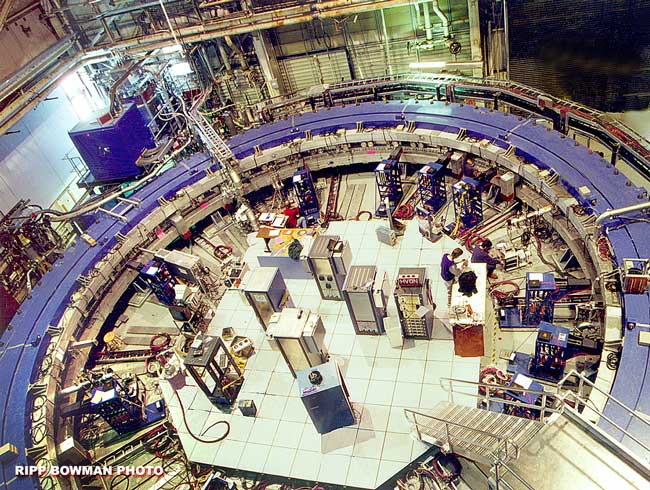
The quest to reconcile the very large with the very small often hinges on the universal relations that govern extreme states of matter. Neutron stars, for instance, exhibit properties—such as the moment of inertia and tidal deformability—that remain remarkably consistent across a wide range of equations of state. This 'insensitivity' is not accidental; it is a consequence of the underlying differential equations that describe stellar structure. Asymptotic analysis shows that only specific parameters survive the journey from the deep interior to the stellar surface, effectively masking the complexity of the star’s core. This same spirit of searching for universal, underlying laws drives the study of fundamental particles like the muon. The 'wobble' of a muon, measured with precision in experiments like g-2, serves as a sensitive probe of the vacuum itself. If the observed rate deviates from theoretical predictions, it may signal the presence of a sea of virtual particles, potentially pointing toward a supersymmetric expansion of the Standard Model that remains hidden in plain sight.