Boundaries of the Invisible
The quest to reconcile the smooth geometry of gravity with the granular reality of quantum mechanics remains the most stubborn friction in modern physics.
A Fraying Concordance
The standard model of cosmology has long served as a reliable map for the universe, grounding our understanding in a mix of general relativity, cold dark matter, and the inflationary physics of the early cosmos. Yet, as our observational tools sharpen, the map has begun to fray. Discrepancies between measurements taken in the early universe and those observed in the late universe suggest that our current framework is incomplete. These tensions are not merely statistical noise; they are the primary indicators that we are approaching the limits of a model that has held sway for decades.
The Error of Infinity
At the heart of this friction is a fundamental question about the nature of reality: is the universe continuous or discrete? While classical physics treats space and time as infinitely divisible, contemporary research increasingly points toward a finite, quantized structure. By replacing the assumption of infinite divisibility with a minimal unit, physicists can bypass the mathematical pathologies of singularities and zero-size particles. In this view, what we perceive as an unbounded expanse is merely a topological illusion—a finite, closed manifold that allows for infinite traversal without requiring infinite volume.
Infinity does not exist as a physical magnitude; it exists only as motion on a closed finite space.
Signatures in the Shadow
The search for new physics often happens at the edges of extreme gravitational environments, such as black holes. By modeling the interaction between matter and the scalar fields surrounding these objects, researchers have found that the presence of 'hair'—additional parameters describing the black hole—significantly alters the surrounding shock cones and the frequencies of trapped oscillations. These quasi-normal modes serve as a diagnostic tool, allowing us to distinguish between singular black holes and regularized geometries like traversable wormholes or black bounces. Such structures, which remain finite at their core, offer a glimpse into how gravity might behave when pushed beyond the limits of traditional general relativity.
The Stochastic Bridge
While gravity governs the macro-scale, the quantum realm demands a different language. The challenge of noise in quantum systems—where energy exchange and state translation are constant—has led to new frameworks for controlling open systems. By mixing damping and anti-damping channels, researchers are gaining the ability to tune dynamics with precision, moving beyond the limitations of standard thermal models. This progress is mirrored in the way we handle hybrid quantum-classical dynamics, where Bayesian inference allows us to treat the wave function and classical variables as a unified stochastic process, turning the problem of state estimation into a matter of filtering and smoothing.
The Bayesian posterior defines a smoothed density matrix, retaining structure that is absent from its simpler second moment.
The Cost of Existence
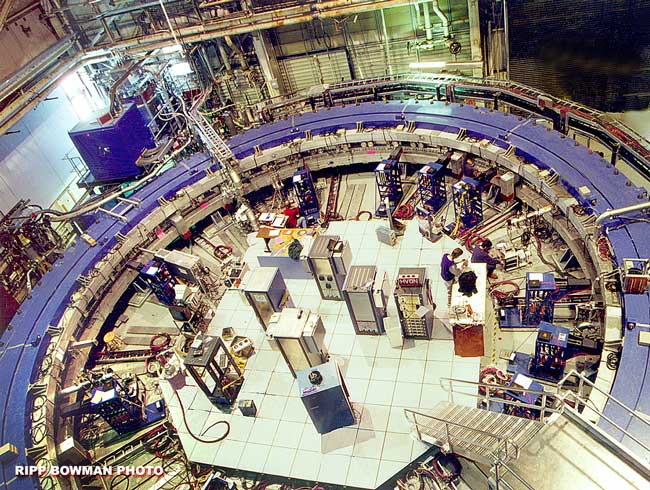
Even as we refine our models, the anomalies persist. The muon's anomalous magnetic moment—its 'wobble'—remains a persistent hint that the vacuum is not empty, but teeming with virtual particles that could include the supersymmetric counterparts to our known world. Simultaneously, data from the Atacama Cosmology Telescope continues to test the limits of our inflationary models, forcing us to reconsider the parameters of the early universe. Whether through the universal relations of neutron star structure or the subtle shifts in the cosmic microwave background, the path forward is marked by a rigorous, incremental narrowing of the possible. We are not merely observing the universe; we are learning how to measure the precise cost of its existence.