Stellar Evolution and the Life of Spent Stars
From the magnetic ghosts of white dwarfs to the violent collapse of massive progenitors, the life of a star is a continuous, often chaotic, transformation of matter.
The Magnetic Ghost
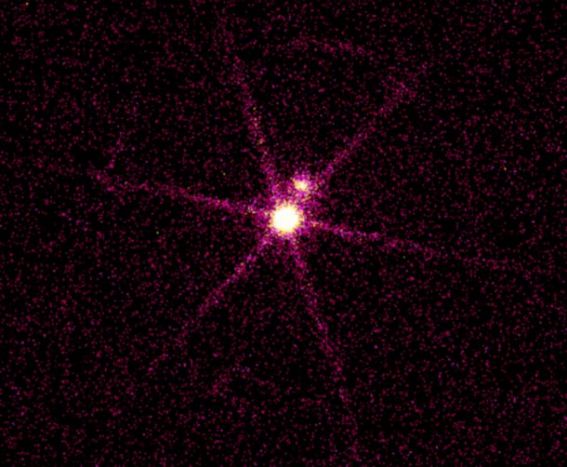
The life of a star is often framed as a struggle against gravity, a balance between the outward pressure of nuclear fusion and the inward pull of its own mass. Yet, when the fuel runs dry, the story does not end; it merely shifts into a new, often more enigmatic phase. In the quiet decay of white dwarfs, we find the remnants of magnetic fields that once defined the star’s youth. These buried forces, once thought to be lost, emerge as the core cools and crystallizes, a process that challenges our understanding of how stellar dynamos persist across eons. Even in the most stable white dwarfs, such as Sirius B, the legacy of a former life remains written in the intense X-ray glow of a surface that has long since ceased to burn with the fire of the main sequence.
Stellar death is not a final silence, but a complex rearrangement of matter and magnetism.
Turbulence in the Cradle
Before a star reaches its final state, it must navigate the volatile period of its infancy. T Tauri stars, still wrapped in the cocoons of their birth disks, demonstrate the instability of this formative era. Observations of stars like TW Hya reveal a chaotic dance of magnetospheric accretion, where the star’s magnetic field carves a gap in the surrounding disk, pulling matter inward in fits and starts. This process is far from steady; it is a turbulent, fluctuating exchange that dictates the star’s rotation and eventual mass. By refining our ability to model these spectra, we gain a clearer view of the accretion rates that define the early growth of stars, stripping away the observational uncertainties that have long obscured the details of their development.
The Final Act of Giants
For the most massive stars, the end is not a slow cooling but a violent, cataclysmic conclusion. Wolf-Rayet stars represent a final, desperate stage where the star sheds its outer layers, exposing the hot, helium-rich core. These stars are the acknowledged progenitors of black holes and the sources of gravitational waves that ripple through the fabric of space-time. Recent surveys using long-baseline interferometry have begun to map the multiplicity of these giants, revealing that their binary companions are fewer than once predicted. This scarcity of long-period companions forces a reassessment of how these massive entities interact with their environments before they collapse, leaving behind a core that may become a neutron star or a singularity.
The Dust of Dying Suns
As stars of intermediate mass reach the Asymptotic Giant Branch (AGB), they become the primary architects of the interstellar medium. Through the production of dust, these dying suns enrich the galaxy with the raw materials for future generations of stars and planets. Observations of dwarf galaxies like NGC 6822 show that even in metal-poor environments, these stars contribute significantly to the cosmic dust budget. The gaseous shrouds they cast off, such as the Little Dumbbell Nebula, serve as a testament to the star’s final expansion. These planetary nebulae are not merely beautiful artifacts; they are the cooling breath of a star that has exhausted its nuclear potential, scattering its remaining mass into the void.
Cycles of the Void
The evolution of a star is inextricably linked to its environment, whether it is a member of a dense open cluster or a solitary wanderer in the galactic field. In the aftermath of a supernova, the shock waves of the explosion, like those seen in the Witch’s Broom Nebula, sweep through the interstellar medium, triggering new cycles of star formation. Meanwhile, in the extreme conditions of a proto-neutron star, the matter itself undergoes phase transitions, potentially forming color-superconducting states that exist for only a heartbeat. These fleeting configurations, along with the statistical discrepancies in white dwarf populations within star clusters, remind us that the life cycle of a star is a multi-dimensional puzzle, where the physics of the very small—subatomic particles and magnetic fields—dictates the fate of the very large.