Beyond the Horizon of the Known
From the early days of lunar photography to the future of synthetic biology, the effort to understand the cosmos remains a study in human persistence.
The Evolution of the Lens
The pursuit of the cosmos has always been defined by the tension between our terrestrial origins and the vacuum beyond. From the early, grainy photographs captured by Hasselblad cameras on the lunar surface to the sophisticated, wide-field X-ray imaging of the XRISM mission, our methods of observation have evolved from simple documentation to precise, high-energy spectroscopy. This shift reflects a broader transition in space science: we have moved from merely visiting the neighborhood to interrogating the fundamental processes that govern galaxy growth and the life cycles of stars.
The history of space exploration is not merely a record of hardware, but a ledger of human ambition calibrated against the unforgiving physics of the void.
The Choreography of Machines
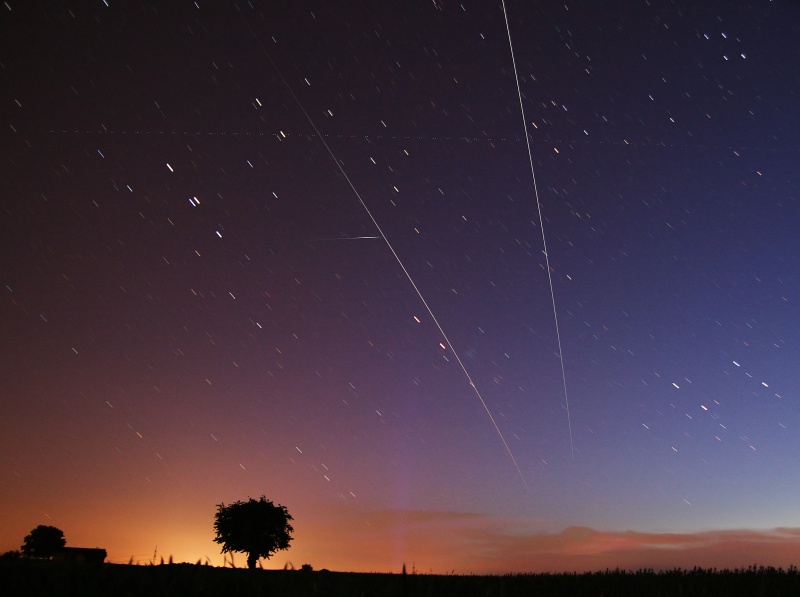
The logistical complexity of these efforts is perhaps best illustrated by the choreography of orbital mechanics. When the Space Shuttle Discovery launched in 2008, its path toward the International Space Station required a precision that rendered the two machines as mere streaks of light against the German evening sky. This mechanical dance is mirrored in the quiet, robotic persistence of probes like Dawn, which spent eleven years navigating the asteroid belt before settling into a permanent orbit around Ceres. These machines, whether crewed or autonomous, serve as our proxies in environments where human biology would otherwise fail.
The Biological Imperative
Human presence in space remains a precarious enterprise, demanding a synthesis of biological resilience and engineering ingenuity. Astronauts like Jessica Meir, whose background in marine physiology provided a unique vantage point for understanding life under pressure, exemplify the interdisciplinary nature of modern exploration. Whether training in underwater habitats or repairing robotic systems like the Canadarm2, the human element remains central to the mission. This work is complemented by researchers such as Lynn Rothschild, who look to synthetic biology and mycology to develop the materials required for long-term habitation on the Moon or Mars, effectively turning the tools of life into the infrastructure of survival.
To understand the potential for life elsewhere, we must first master the art of surviving the extreme environments of our own planet.
Mapping the Invisible
The scientific horizon is currently shifting toward the circumgalactic medium, that vast, elusive reservoir of gas surrounding galaxies. Concepts like the Ardua mission aim to map this region, bridging the gap between our understanding of individual stars and the cosmic web. Simultaneously, our focus on the moons of Jupiter—Callisto, Europa, and Ganymede—continues to sharpen, as we search for the liquid water that might harbor the conditions for life. These missions represent a maturation of our curiosity; we are no longer satisfied with mere images but are seeking to map the invisible flows and hidden reservoirs that define the architecture of the universe.
The Human Cost of the Stars
The trajectory of space exploration is rarely a straight line. It is marked by both technical triumph and the messy, unpredictable realities of human life, as seen in the career of Lisa Nowak, whose path from the Naval Academy to the shuttle flight deck underscores the intense pressures inherent in the astronaut corps. Despite the volatility of human institutions, the commitment to the mission persists. Whether through the lens of a telescope or the hands of an engineer, the objective remains constant: to understand our place in a system that is as vast as it is indifferent to our presence.