Cosmic Observation Through Data Synthesis
Modern observational astronomy relies less on the romantic notion of the lone stargazer and more on the patient, multi-instrumental orchestration of data across the electromagnetic spectrum.
Coordinated Sight
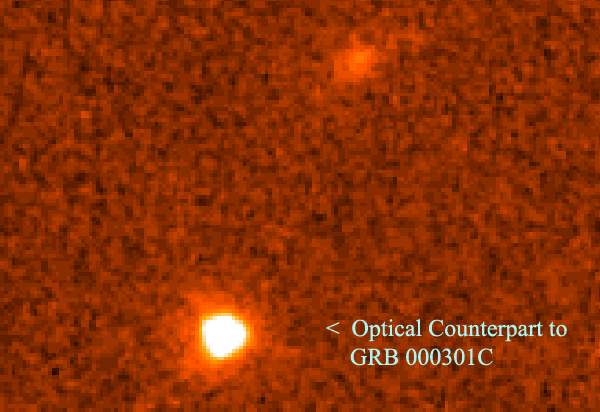
The modern observer is rarely a solitary figure peering through a glass lens. Instead, they are a conductor of disparate signals, synthesizing information from orbiting gamma-ray detectors, ground-based radio dishes, and infrared sensors. When a transient event occurs—a gamma-ray burst, for instance—the response is immediate and international. Telescopes across the globe pivot in a coordinated dance to capture the fading light of an explosion that may have occurred billions of years ago. This process is not merely about seeing; it is about timing and translation, turning a ten-second flash into a multi-wavelength narrative that spans the history of the universe.
The modern observer is a conductor of disparate signals, synthesizing information from orbiting gamma-ray detectors and ground-based radio dishes.
The Limits of Resolution
Even when we turn our gaze to the familiar, the challenge of resolution remains. For decades, the shimmering turbulence of Earth's atmosphere acted as a veil, blurring the fine details of the Sun or distant stars. The advent of adaptive optics and long-baseline interferometry has allowed us to peel back this layer, revealing the intricate, hair-like filaments of sunspots or the asymmetric winds of hypergiant stars. These techniques effectively turn multiple, smaller telescopes into a single, gargantuan instrument, pushing the limits of what can be resolved in the inner atmospheres of stars that were once mere points of light.
Yet, even with this newfound clarity, the data often defies simple categorization. Observations of Betelgeuse, for example, reveal persistent hot patches and convective structures that challenge our existing models of stellar evolution. We are finding that the surfaces of these giants are not uniform spheres, but dynamic, clumpy environments where the physics of mass loss is written in the movement of gas and dust.
Constructing the Cosmos
Beyond the individual star, the study of galaxy formation and evolution requires a different kind of patience. By combining high-resolution imaging from space with sub-millimeter observations from the ground, researchers can map the dusty, chaotic interiors of colliding galaxies. These mergers, which unfold over hundreds of millions of years, are not the tidy, symmetrical events once imagined. They are messy, complex processes where star formation is triggered in unexpected pockets, and where the central black holes eventually unify into a single, active nucleus.
In the earliest stages of this process, protostellar disks appear surprisingly smooth, with the distinct gaps and rings often associated with planet formation appearing only in the most evolved systems. This suggests that the architecture of a solar system is a slow, deliberate construction, hidden behind veils of dust that only the most sensitive infrared instruments can penetrate.
The architecture of a solar system is a slow, deliberate construction, hidden behind veils of dust that only the most sensitive infrared instruments can penetrate.
Beyond the Visible
The frontier of observation is currently expanding into the realm of the invisible. While traditional astronomy relies on light, the next generation of observatories will use gravitational waves to detect events that emit no radiation at all. A network of laser interferometers, sensitive enough to detect the ripples caused by merging black holes in the early universe, promises to change our understanding of fundamental physics.
Simultaneously, researchers are sifting through archival data, looking for anomalies—mysterious transients—that might hint at the presence of dark matter or other phenomena that current physics cannot yet explain. Whether through the detection of gravitational waves or the re-examination of century-old sky surveys, the goal remains the same: to find the signal within the noise, and to recognize that what we cannot see is often as significant as what we can.