Clouds of Light and Debris
From the violent remnants of exploded suns to the quiet nurseries of new stars, the nebulae of our galaxy reveal the cyclical nature of the cosmos.
The Anatomy of a Cloud
The night sky is often imagined as a static tapestry, yet it is littered with the debris of violent transformation. Nebulae, once dismissed as mere smudges in early telescopic surveys, are now understood as the primary theaters of stellar life and death. These vast, diffuse clouds of gas and dust act as both the nurseries where stars ignite and the graveyards where they scatter their remains. Whether they are the glowing shrouds of a sun-like star in its final throes or the dense, cold cradles of future solar systems, these structures define the chemistry and evolution of the galaxy.
Nebulae are the primary theaters of stellar life and death, acting as both the nurseries where stars ignite and the graveyards where they scatter their remains.
Echoes of a Supernova
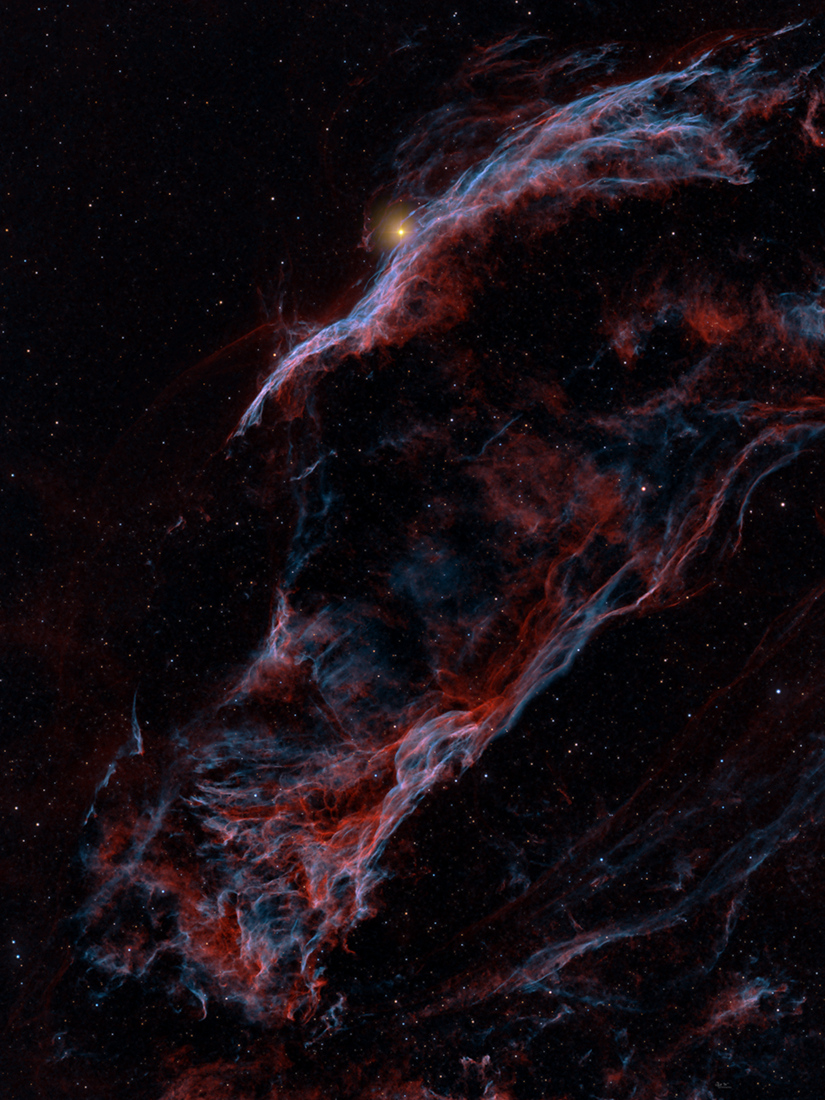
When a massive star reaches the end of its life, it does not simply vanish. It detonates, sending a shock wave through the interstellar medium that sweeps up material like a snowplow. The Veil Nebula in Cygnus is a prime example of this cataclysm. What we perceive as delicate, glowing filaments are actually ripples in a colossal sheet of gas, ionized by the energy of the explosion. These structures, spanning over 70 light-years, serve as a visual record of a death that reached Earth’s vicinity five millennia ago.
The Geometry of Departure
Not all nebulae are the result of such sudden violence. The Ring Nebula in Lyra presents a more measured departure. Here, a sun-like star has gently shed its outer layers, creating a barrel-shaped shroud that glows under the intense ultraviolet radiation of the exposed core. The familiar ring shape is a trick of perspective; we are looking down the center of a structure that, in reality, extends far beyond the central band. It is a quiet, luminous exit that leaves behind a ghost of the star that once was.
The familiar ring shape is a trick of perspective; we are looking down the center of a structure that extends far beyond the central band.
Nurseries in the Dark
Conversely, the Lagoon Nebula in Sagittarius offers a glimpse into the chaotic beginnings of stellar existence. Spanning 100 light-years, this region is so expansive it remains visible to the naked eye. Within its depths, dark lanes of dust and dense globules signal active star formation. It is a place of perpetual motion, where young clusters like NGC 6530 have only recently emerged from the gas, and where the process of building new suns continues unabated.
The Illusion of Cohesion
The appearance of these clouds can be deceptive. In regions like NGC 2467, what looks like a single, coherent system is often a complex superposition of stars at varying distances, unrelated to the gas they seem to illuminate. Some stars have already cleared their birth cocoons, while others remain hidden behind opaque walls of dust, slowly evaporating under the heat of their neighbors. These nebulae are not static objects but dynamic environments where the interplay of gravity, radiation, and time dictates the birth of new light.