Sudden Planetary Shifts
From the tectonic shifts of the crust to the spontaneous violence of the open sea, the planet remains a theater of unpredictable and often overwhelming natural forces.
The Geometry of Ruin
The Earth is a restless substrate, prone to sudden, violent recalibrations. In July 2026, a series of shallow earthquakes rattled regions from Mexico to the Philippines, serving as a reminder of the planet's persistent tectonic instability. These events, while routine in the geological sense, underscore the fragility of human settlement. When the crust shifts, the impact is often measured in magnitude and depth, yet the human experience remains one of sudden, jarring displacement. Such seismic activity is the baseline of planetary change, a constant friction between the lithosphere and the structures we place upon it.
Nature does not merely inhabit the landscape; it occasionally reconfigures it with a violence that defies our standard measures of scale.
Fire and the Atmosphere
Fire, when uncontained, behaves less like a chemical reaction and more like a weather system. Wildfires currently tracked across North Carolina, Florida, and Washington demonstrate how heat can manipulate the air itself. When intense heat meets turbulent wind, it can spawn fire whirls—vortices of flame and ash that act with the erratic aggression of a tornado. These phenomena are not merely side effects of combustion; they are active agents of propagation, lifting burning debris to ignite new fronts far from the original blaze. In this state, the fire creates its own climate, dictating the movement of air and the path of destruction.
The Dirty Thunderstorm
Lightning is often perceived as the exclusive domain of the cumulonimbus cloud, yet the phenomenon is far more versatile. Volcanic lightning, or the dirty thunderstorm, arises from the chaotic plume of an eruption. As ash fragments and rock particles collide, they generate static electricity, creating a display of light and sound that mirrors the atmospheric mechanics of a standard storm. Whether sparked by the ice-laden updrafts of a mountain peak or the abrasive friction of volcanic ejecta, these discharges represent the atmosphere’s attempt to resolve an electrical imbalance. It is a violent, luminous correction.
Lightning is the signature of a system in conflict, a discharge of energy born from the friction of particles that have no business colliding.
The Unpredictable Surface
The open ocean possesses a capacity for sudden, localized extremity that defies statistical norms. Rogue waves—transient, massive walls of water—are distinct from the long-wavelength propagation of tsunamis. While a tsunami is a systemic displacement of the ocean floor, a rogue wave is a spontaneous convergence of energy, where wind and current conspire to create a singular, overwhelming peak. These waves are the ocean’s equivalent of a sudden, inexplicable rupture, capable of appearing in relatively calm conditions to challenge the structural integrity of anything in their path.
The Scale of the Unforeseen
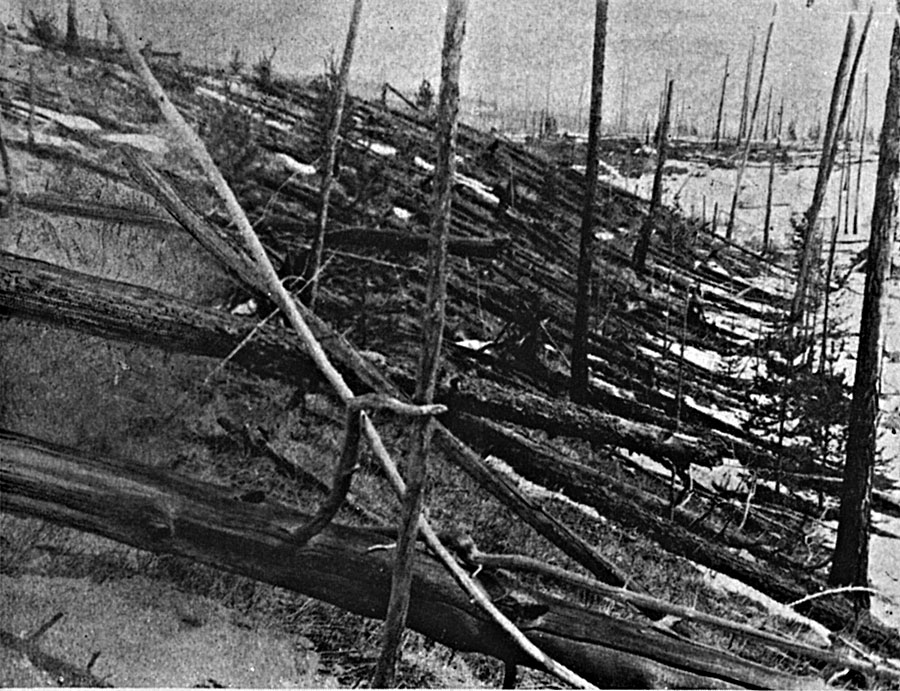
The Tunguska event of 1908 remains the definitive example of the sky’s capacity for sudden intervention. An explosion estimated at a thousand times the power of the Hiroshima bomb, triggered by a meteor detonating in the Siberian atmosphere, flattened forests for miles. It serves as a stark reminder that the most significant threats to the surface often arrive from above. While modern astronomy focuses on identifying such objects, the event highlights a fundamental truth: the Earth is a small target in a crowded solar system, and the mechanisms of disaster are as varied as the forces that govern the planet itself.