Cosmological Constants Under Empirical Review
As our instruments reach further into the early universe, the standard model of cosmology faces a series of rigorous, and often unsettling, empirical tests.
Echoes of the Beginning
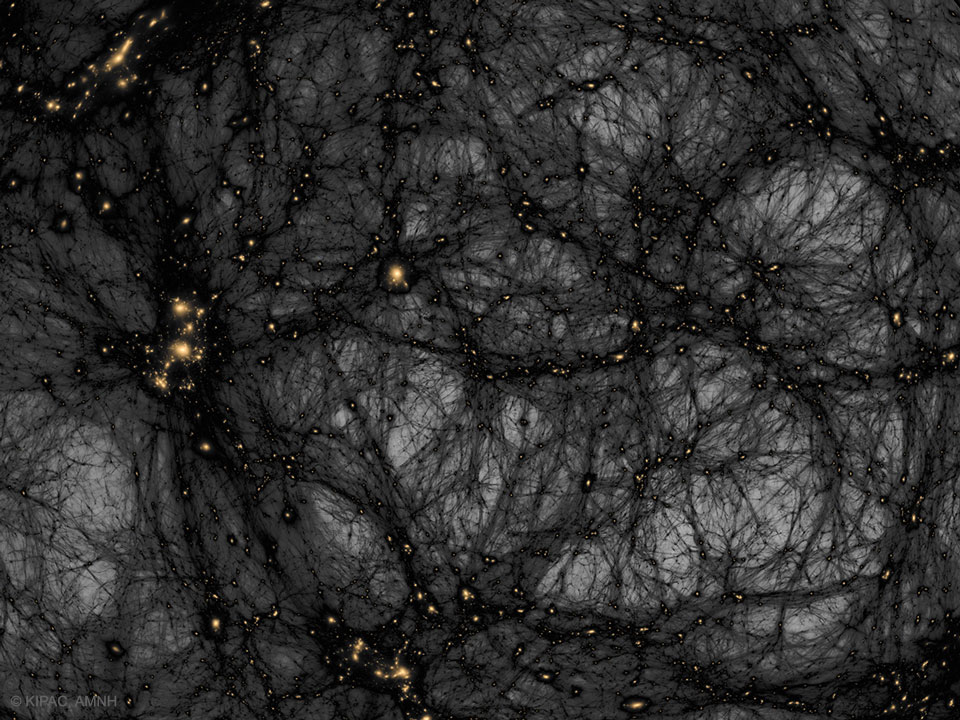
The quest to map the cosmos began with the humble, mechanical precision of the Dicke radiometer. In the early 1960s, researchers at Princeton sought the thermal signature of a hot, dense origin, a search that culminated in the accidental detection of the cosmic microwave background. This faint, pervasive hum provided the first empirical foothold for the Big Bang theory, transforming abstract speculation into a testable science of origins. By the 1990s, the Hopkins Ultraviolet Telescope extended this inquiry, detecting intergalactic helium remnants that confirmed the universe’s early structure as a vast, interconnected web of bubbles and voids.
The history of the universe is not a static ledger but a series of adjustments to our own ignorance.
The Architecture of the Void
Modern observation has refined this early picture into a sophisticated census of cosmic density. Large-scale surveys, such as those conducted by eROSITA, trace the evolution of galaxy clusters to weigh the matter content of the universe and constrain the influence of neutrinos. These clusters act as gravitational signposts, revealing a universe dominated by dark matter, which forms the filamentary scaffolding upon which visible matter clings. Yet, even this structure is punctuated by anomalies; vast, low-density regions—some spanning a billion light-years—suggest that the distribution of matter is far from uniform, challenging our understanding of how gravity shapes the largest volumes of space.
Gravity Under Scrutiny
The standard model of cosmology, known as Lambda-CDM, relies on the assumption that General Relativity holds true across all scales. Recent data from the Dark Energy Spectroscopic Instrument, however, has pushed this assumption to its limits. By analyzing the clustering of galaxies and the growth of structure, researchers are testing for deviations in gravitational behavior. Theoretical frameworks like f(Q,T) gravity and Freezing Gravity models attempt to reconcile the observed expansion history with the possibility that gravity itself might be modified by the presence of matter or non-metricity. These efforts seek to determine if the acceleration of the universe is a byproduct of a mysterious dark energy or a sign that our fundamental description of gravity is incomplete.
We are currently testing whether the laws of gravity are universal constants or merely local approximations.
The Chemistry of First Light
While the largest scales of the universe remain a puzzle, the smallest components of galaxies offer their own clues. The James Webb Space Telescope has allowed astronomers to measure the mass-metallicity relation in galaxies dating back to the first billion years after the Big Bang. This ratio of stellar mass to gas metallicity serves as a diagnostic tool for how galaxies process their fuel. By comparing these observations with high-resolution simulations, researchers have found that the chemical enrichment of the early universe is highly sensitive to the timing of supernova feedback and the stochastic nature of star formation. These early stars, which seeded the cosmos with heavy elements, were not merely observers of the expansion but active participants in the chemical evolution that eventually enabled the formation of complex structures.
Tension in the Ladder
The precision of modern cosmology has brought a persistent discrepancy to the fore: the tension between two-dimensional and three-dimensional measurements of Baryon Acoustic Oscillations. Because these signals are derived from the same catalogs of tracers, their disagreement suggests either a systematic error in our measurement techniques or a deeper issue with how we calibrate the distance scale of the universe. By using Type Ia supernovae as independent redshift interpolators, researchers are now isolating these tensions from the constraints of specific cosmological models. This approach, which relies on the robustness of the cosmic distance duality relation, represents a vital check on the fundamental physics governing the propagation of light across an expanding, and perhaps evolving, space-time.