Unstable Ground
The warming climate is not merely a background condition but an active agent that accelerates the degradation of the systems upon which we depend.
The Feedback Loop
Climate change is often framed as a static threat, a looming horizon of rising temperatures. Yet, recent research suggests it functions more like an engine that powers its own acceleration. In agricultural systems, for instance, the warming climate acts as a force multiplier. It reduces crop productivity and forces farmers to rely more heavily on agrochemicals, which in turn degrade soil health and increase greenhouse gas emissions. This creates a self-reinforcing cycle where the very methods used to sustain food production under stress contribute to the further destabilization of the environment.
Climate change is not merely a background condition but an active agent that accelerates the degradation of the systems upon which we depend.
Oceanic Tipping Points
The Atlantic meridional overturning circulation, a vital component of global climate regulation, is increasingly viewed as a tipping element. Recent modeling indicates that the stability of this circulation is tied to the Atlantic freshwater budget. As melting sea ice and shifting ocean-atmosphere fluxes introduce more freshwater, the salt-advection feedback—a mechanism that keeps the circulation in check—becomes destabilized. Many current models may actually underestimate this risk due to built-in biases, suggesting that the threshold for a collapse could be closer than previously understood.
The Fragility of Resilience
Even ecosystems once thought robust are showing signs of exhaustion. In the alpine tundra, the duration of snow cover dictates the growth cycles of shrubs like Juniperus communis. As snowpack permanence wanes, these plants are forced to alter their carbon allocation strategies, shifting from long-term storage to immediate growth. While this might appear as a temporary adaptation, it leaves the plants vulnerable to seasonal fluctuations. Similarly, forest ecosystems globally are facing increased mortality rates from heat and drought, which in turn diminishes their capacity to serve as carbon sinks, further complicating the global carbon balance.
The Vanishing Inventory
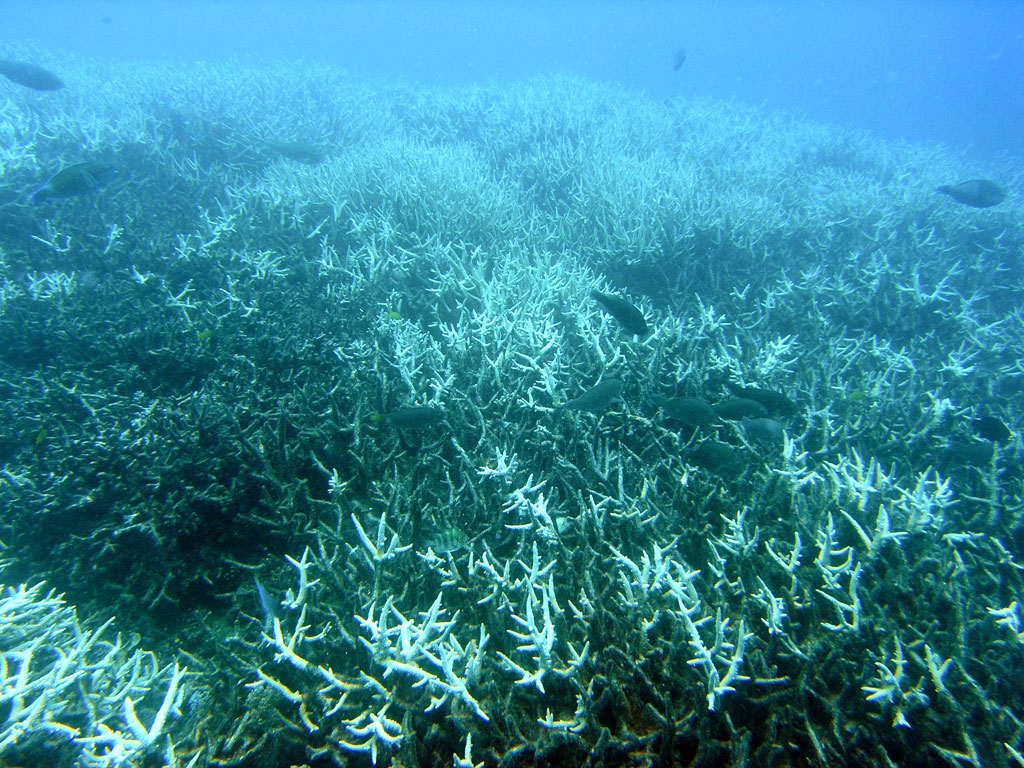
The speed of environmental change is perhaps most visible in the Pyrenees, where glaciers are retreating at a rate that defies historical precedent. Between 2020 and 2023, the glacierized area in this region shrank by nearly 40 percent. This is not a slow, geological transition but a rapid, modern collapse. The loss of these ice bodies is mirrored in the world’s coral reefs, where rising temperatures and ocean acidification trigger mass bleaching events. These are not isolated incidents but symptoms of a system undergoing a phase shift that threatens the biodiversity of entire biomes.
The loss of these ice bodies is not a slow, geological transition but a rapid, modern collapse.
Conceptualizing the Massive
To understand these shifts, we must grapple with entities that transcend human scale. Philosophers like Timothy Morton describe climate change as a hyperobject—a phenomenon so massively distributed in time and space that it defies our traditional ways of measuring or locating it. This scale makes the work of scientists like Jacqueline McGlade essential; by utilizing spatial dynamics and big data, they attempt to map the nonlinear interactions of these systems. The challenge lies in the fact that our policies and perceptions are often built for a stable world that no longer exists, requiring a fundamental shift in how we relate to the non-human world.