Planetary Chemistry in Flux
From the melting peaks of Xinjiang to the bleaching reefs of the tropics, climate change is not merely a warming trend but a fundamental restructuring of planetary chemistry.
A Geography of Unrest
Climate change is often discussed as a singular, atmospheric event, yet its manifestations are stubbornly local and diverse. In the high mountain ranges of Xinjiang, for instance, the retreat of glaciers has not followed a linear path of disaster. Between 1950 and 2000, the frequency of glacial hazards rose steadily, but since the turn of the millennium, that rate has decelerated even as temperatures continue to climb. This apparent contradiction highlights the complexity of mountain systems, where the primary driver of change—heat—interacts with topography to produce shifting patterns of debris flows and floods. These events, occurring frequently between 2,000 and 3,000 meters above sea level, serve as a reminder that the physical landscape is actively responding to a warming world in ways that defy simple prediction.
The physical landscape is actively responding to a warming world in ways that defy simple prediction.
The Chemistry of Flow
The impact of a changing climate extends deep into the hydrological cycle, altering the very composition of the water that sustains ecosystems. As sea levels rise and precipitation patterns shift, freshwater systems are increasingly subjected to salt intrusion and land-based pollution. These salt ions are not inert; they trigger a series of biogeochemical chain reactions that ripple from headwaters to the coast. This salinization can lead to the mobilization of contaminants, the deoxygenation of water, and long-term changes in the acidity of rivers. The result is a profound shift in the quality of water available for human consumption, agriculture, and the survival of aquatic species.
Feedback Loops in the Field
Agriculture, the bedrock of human civilization, is finding itself caught in a reinforcing feedback loop. Climate change acts as an amplifier for the environmental costs of farming, reducing crop yields while simultaneously forcing a greater reliance on agrochemicals that are themselves becoming less effective. As heatwaves and droughts intensify, the land becomes more prone to erosion and the encroachment of pests. This creates a cycle where the search for food security inadvertently accelerates the very environmental degradation that threatens future harvests. Furthermore, the global scale of biomass burning—from the savannas of Africa to the forests of South America—contributes massive quantities of carbon and particulate matter to the atmosphere, further destabilizing the conditions under which modern agriculture operates.
The search for food security inadvertently accelerates the very environmental degradation that threatens future harvests.
The Limits of Adaptation
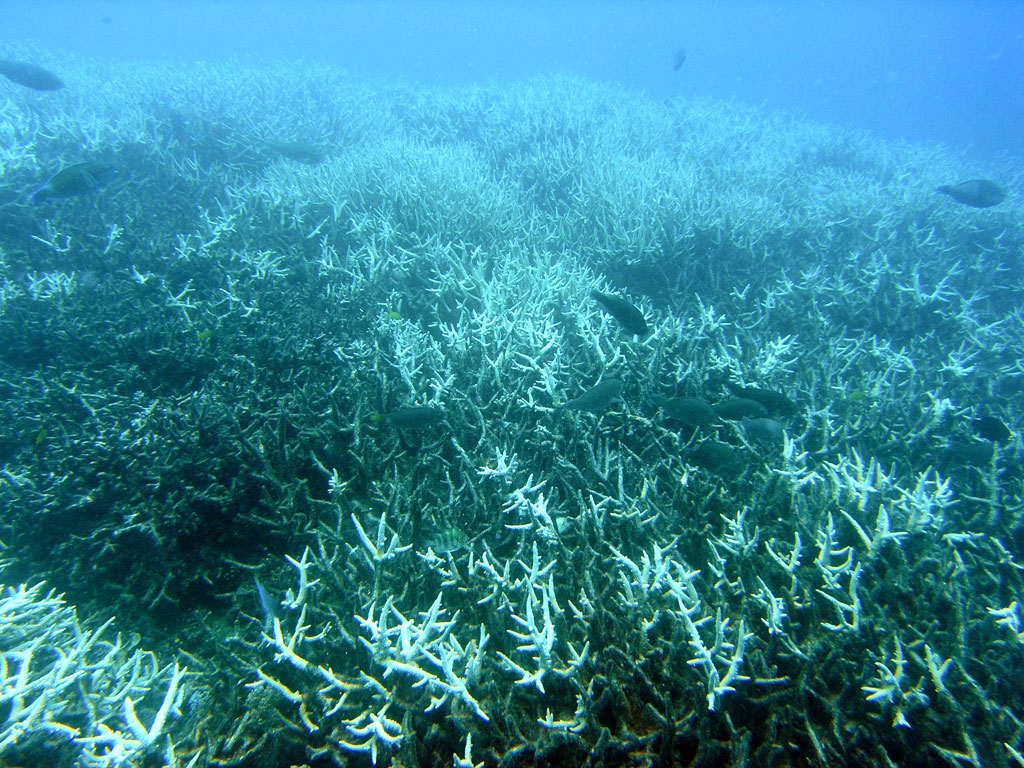
The biological world is struggling to keep pace with these rapid shifts. In the oceans, rising temperatures and acidification are driving mass coral bleaching, a phenomenon where corals expel the algae essential to their survival. This is not a localized nuisance but a systemic collapse of reef structures that protect coastlines and support marine biodiversity. On land, forests are facing unprecedented mortality rates as heat and drought stress push trees beyond their physiological limits. These are not merely isolated instances of loss; they represent a potential phase shift in the composition of the planet's biomes. As species attempt to shift their ranges or adjust their phenology, the risk of extinction looms, with some models suggesting we are witnessing the early stages of a sixth mass extinction.
Measuring the Invisible
Understanding these changes requires a sophisticated grasp of data, from the vertical mapping of ocean heat content to the satellite monitoring of global fire spots. The ocean, which absorbs the vast majority of the energy trapped by the Earth's energy imbalance, is a critical indicator of our trajectory. Improved modeling techniques, such as those using bivariate Gaussian processes, are helping scientists reduce uncertainty in these measurements, providing a clearer picture of how much heat the deep waters are sequestering. Yet, as philosopher Timothy Morton suggests, climate change remains a 'hyperobject'—a phenomenon so massively distributed in time and space that it transcends our ability to localize it. It is a reality that demands not just better measurement, but a fundamental reassessment of how we relate to the non-human systems that sustain us.