Climate Metrics Measuring a Shifting Planet
As climate change shifts from a distant prediction to a present reality, the tools we use to measure its reach are becoming as complex as the crisis itself.
The Calculus of Disruption
Climate change is frequently discussed as a future threshold, yet the data suggests it is already a persistent, measurable presence. In the Middle East and North Africa, researchers have observed a distinct shift in environmental stability. Since 1998, the region has seen a marked increase in the frequency of drought. While traditional metrics like the Standardized Precipitation Index capture moderate dry spells, they often fail to account for the accelerating influence of rising temperatures. By employing the Standardized Precipitation Evapotranspiration Index, which integrates temperature-driven water loss, scientists have uncovered a more severe reality: drought is not merely a lack of rain, but a compounding effect of heat that is fundamentally altering the landscape.
Drought is no longer merely a lack of rain; it is the compounding effect of heat.
Mountains in Motion
High-altitude regions, often perceived as static, are proving to be among the most volatile environments on Earth. In the mountain ranges of Xinjiang, the relationship between temperature and disaster is stark. While the number of glacial hazards has decelerated since the turn of the century, the nature of these events has evolved. Glacier debris flows, once rare, have become a recurring threat to infrastructure, particularly during summer months. These hazards are driven primarily by temperature rather than rainfall, illustrating how the retreat of ice creates new, unpredictable risks for the communities situated in the valleys below.
The Feedback Loop of the Fields
Agriculture, the bedrock of human civilization, is increasingly caught in a self-reinforcing cycle. Climate change is not just a threat to crop yields; it acts as an amplifier for the environmental damage already inherent in intensive farming. By reducing the efficacy of fertilizers and accelerating the spread of pests and diseases, a warming climate forces farmers to intensify their practices, which in turn drives further greenhouse gas emissions. This feedback loop suggests that the challenge of feeding a growing global population is becoming inseparable from the challenge of stabilizing the climate itself.
The challenge of feeding a growing population is becoming inseparable from the challenge of stabilizing the climate.
The Limits of Observation
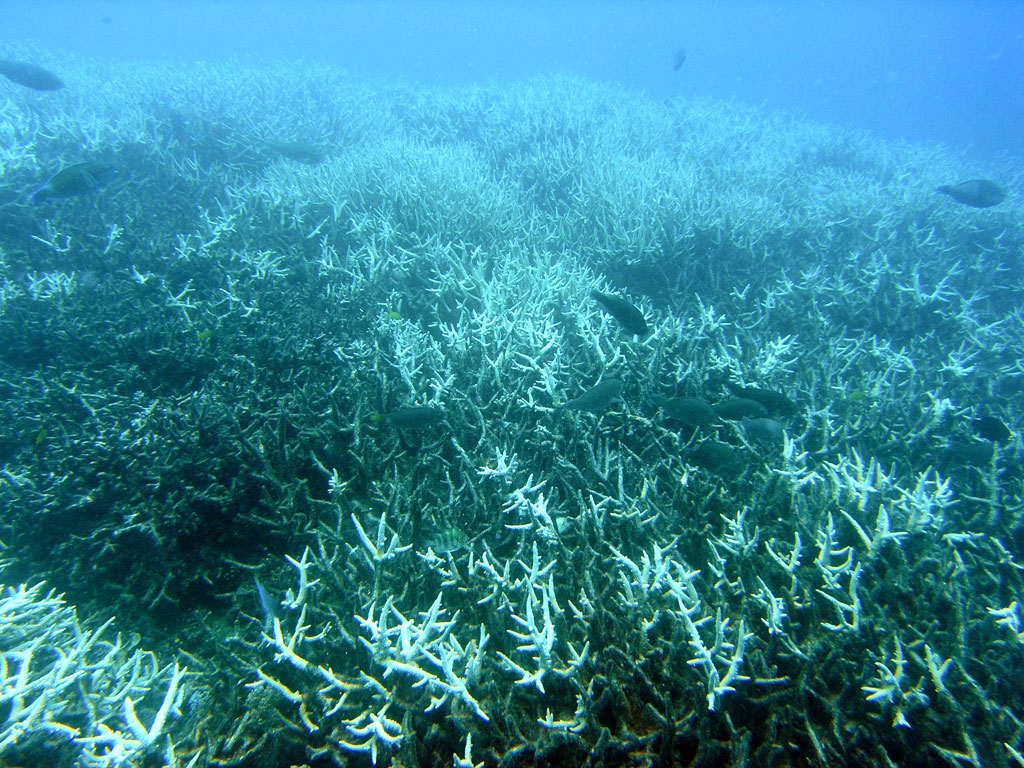
As the climate system absorbs the vast majority of the energy trapped by greenhouse gases, the oceans have become a critical, if difficult, site of study. Recent advancements in mapping ocean heat content demonstrate the necessity of precision; by modeling the correlation between different pressure layers, researchers have managed to reduce uncertainty in their data by 15 percent. This is not merely an academic exercise. Understanding the exact state of the ocean is essential for monitoring the health of ecosystems like coral reefs, which are currently suffering from mass bleaching events as water temperatures exceed their biological tolerance. Without accurate data, the scale of these losses remains obscured.
Naming the Unlocalizable
The philosopher Timothy Morton has proposed the term 'hyperobject' to describe phenomena like climate change. Unlike a localized event, a hyperobject is so massively distributed in time and space that it transcends our ability to point to it as a single thing. It is present in the melting of a glacier, the bleaching of a reef, and the shifting patterns of drought across a continent. This conceptual framework helps explain why climate change is so difficult to address: it is not a singular problem to be solved, but a condition that permeates every aspect of the natural and human world. As the IPCC’s 'burning embers' diagrams show, the risks are not static; they are escalating, and our ability to track them is the first step toward understanding the scale of the transformation.