Climate Destabilization Across Global Ecosystems
Across mountains, oceans, and forests, the climate is no longer a backdrop but an active, destabilizing force.
An Entity Beyond Reach
Climate change is often discussed as a series of discrete, manageable problems—a heatwave here, a flood there. Yet, as philosopher Timothy Morton suggests, it is more accurately understood as a hyperobject. These are phenomena so massively distributed in time and space that they defy our attempts to pin them to a single location or moment. We do not experience the climate in its totality; we encounter its symptoms, which ripple through systems we once assumed were stable.
We do not experience the climate in its totality; we encounter its symptoms, which ripple through systems we once assumed were stable.
High Altitude Instability
In the high mountains of Xinjiang, the relationship between warming and disaster is far from linear. Over the last seventy years, the frequency of glacial hazards—such as debris flows and outburst floods—has shifted in response to rising temperatures. While the raw number of these events decelerated after the turn of the millennium, their intensity has not. Debris flows now frequently threaten major infrastructure like the Karakoram Highway, particularly during the summer months. These hazards are driven primarily by the thermal state of the mountains rather than simple rainfall, illustrating how a warming atmosphere reshapes the physical stability of the world’s highest elevations.
The Hydrological Squeeze
The upper Blue Nile basin offers a stark look at how rising temperatures deplete the moisture essential for regional survival. As evapotranspiration rates climb, the watersheds of Ethiopia face a future of increasing seasonal aridity. Models projecting into the end of the century suggest that the dry seasons will become significantly more moisture-starved, placing immense pressure on the hydrological processes that sustain local agriculture and communities. This is not merely a matter of less rain, but of a landscape becoming increasingly efficient at losing the water it already possesses.
The landscape is becoming increasingly efficient at losing the water it already possesses.
Feedback Loops in the Field
Agriculture, the very system humanity relies upon for sustenance, is caught in a self-reinforcing cycle. Climate change acts as an amplifier for the sector’s environmental footprint, reducing crop yields while simultaneously necessitating more intensive interventions. As pests expand their ranges and soil erosion accelerates, the resulting agricultural responses often contribute further to the greenhouse gas emissions that drive the initial warming. This creates a feedback loop where the effort to feed a growing population inadvertently destabilizes the conditions required for that same production.
The Fragility of the Living World
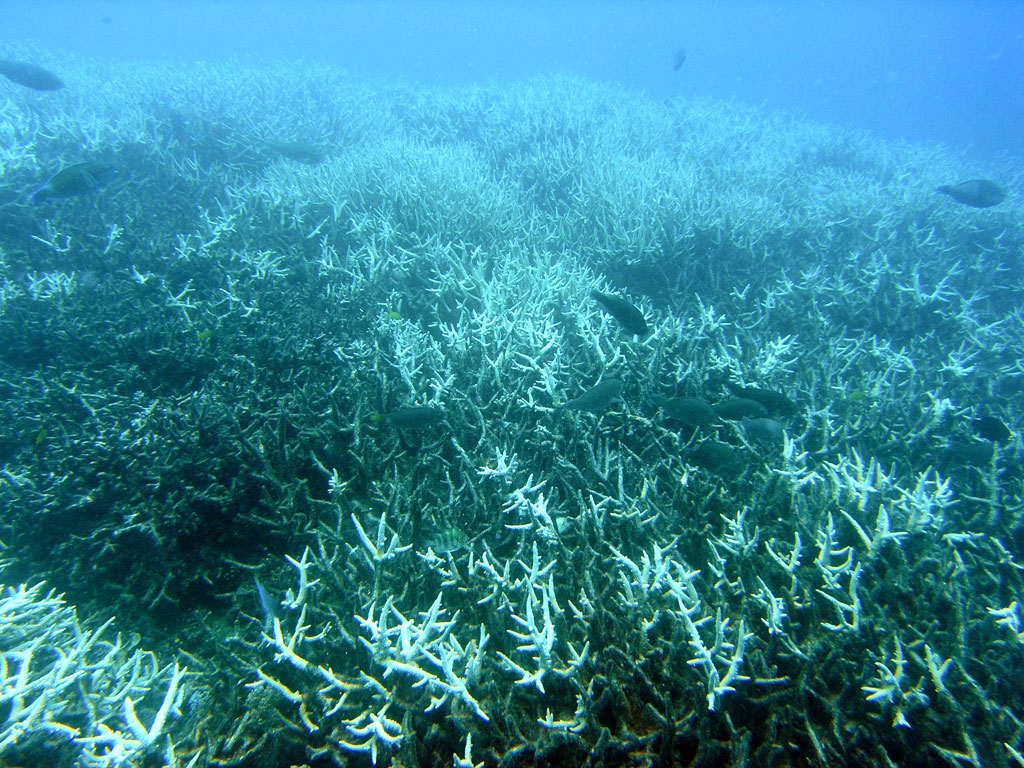
From the bleaching of coral reefs to the mortality of forests, the biological world is signaling a departure from the conditions under which it evolved. Marine heatwaves have become the primary driver of mass coral bleaching, as corals expel the symbiotic algae necessary for their survival. Similarly, global assessments of tree mortality reveal that forests once considered resilient are now succumbing to drought and heat stress. These are not isolated losses; they represent a fundamental alteration of the biogeography of the planet, where the services provided by these ecosystems—carbon sequestration, coastal protection, and biodiversity—are increasingly at risk of collapse.
The Metrics of a Burning Planet
Whether through the lens of satellite-monitored biomass burning or the mapping of ocean heat content, the effort to quantify these changes is a race against the scale of the crisis. New methods in oceanography now allow for more precise mapping of heat storage, revealing the energy accumulated by the climate system with greater statistical confidence. Meanwhile, global inventories of biomass burning highlight the seasonal and regional intensity of fires, which now frequently escalate into megafires. These tools provide the data necessary to understand the scope of the change, yet they also underscore the sheer magnitude of the shifts currently underway.