Atmospheric Thirst and Global Ecosystem Shifts
A warming climate acts not as a singular event, but as a persistent, invisible force that reconfigures the fundamental mechanics of our ecosystems.
The Scale of the Invisible
The philosopher Timothy Morton describes climate change as a hyperobject—a phenomenon so massively distributed across time and space that it transcends our ability to pin it to a single location or moment. Unlike a storm that arrives and departs, this is a condition that has fundamentally altered the baseline of planetary existence. It is not merely an external threat but a pervasive, structural reality that shapes the way we interact with the world.
We are grappling with a reality so vast in its temporal and spatial reach that it defies our traditional modes of perception.
The Drying of the Middle East
In the Middle East and North Africa, the shift is measurable in the soil and the air. Since the late 1990s, the region has transitioned from wetter cycles to a state of chronic, intensified drought. While traditional metrics like the Standardized Precipitation Index capture the absence of rain, they often fail to account for the accelerating thirst of the atmosphere itself. When researchers employ the Standardized Precipitation Evapotranspiration Index, which factors in rising temperatures, the severity of the drought becomes starkly apparent.
This atmospheric demand for moisture is not limited to arid plains. In the headwaters of the Blue Nile, climate models suggest that potential evapotranspiration will continue to climb throughout the century. As temperatures rise, the watersheds that sustain millions are projected to see a significant depletion of moisture during dry seasons, forcing a reliance on conservation techniques that were once supplementary but are now essential for survival.
Mountain Hazards and Shifting Risks
In the high mountain ranges of Xinjiang, the warming climate has rewritten the geography of disaster. For decades, the number of glacial hazards increased alongside rising temperatures, though the rate of occurrence has decelerated since the turn of the millennium. This shift does not imply a return to stability; rather, it reflects a change in the nature of the threat.
While the frequency of glacial lake outburst floods has waned, the danger has migrated. Debris flows, particularly in the Tianshan and Pamir ranges, have become more frequent since 2010. These events, often triggered by the destabilization of slopes above 4,500 meters, now pose a persistent risk to critical infrastructure during the summer months. The mountain environment is proving that as ice retreats, the ground itself becomes a more volatile participant in the climate system.
The retreat of ice is not a quiet disappearance; it is a violent restructuring of high-altitude landscapes.
Feedback Loops in the Biosphere
The environmental impacts of a warming world are rarely contained within a single sector. Agriculture, for instance, is caught in a self-reinforcing cycle: climate change reduces crop productivity and increases pest pressure, which in turn necessitates more intensive land use and chemical application, further degrading the environment. This feedback loop is mirrored in our forests, where heat and drought stress are pushing trees toward higher background mortality rates, potentially turning carbon-sequestering ecosystems into carbon sources.
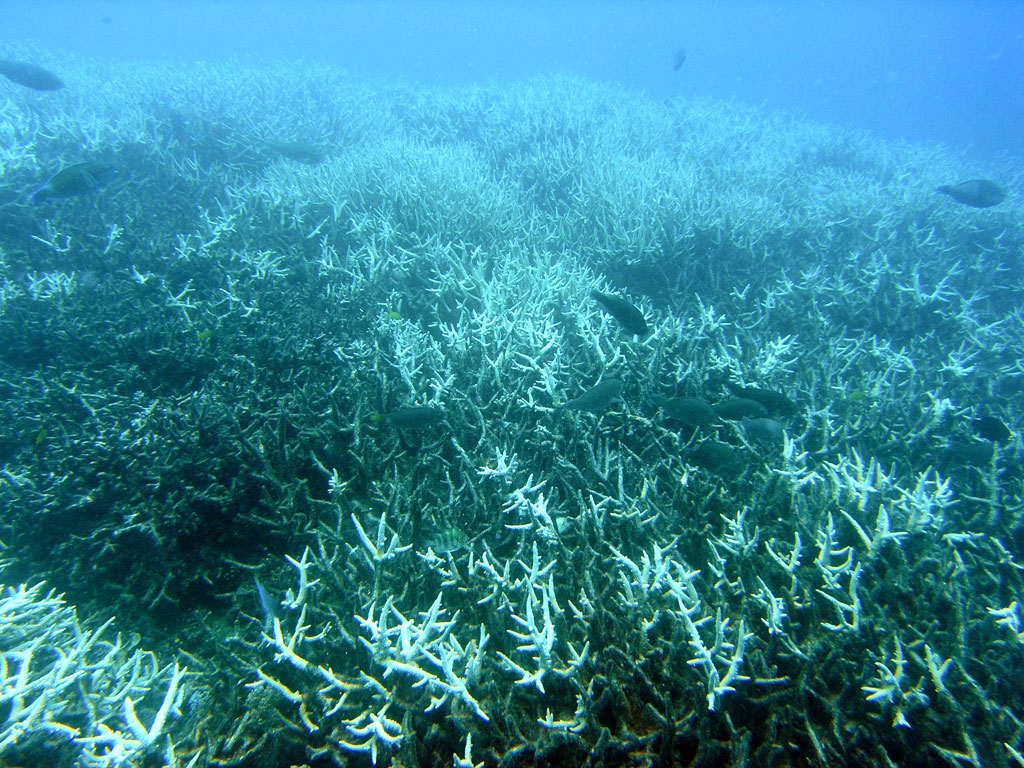
This volatility extends to the oceans, where the symbiosis between corals and their resident algae is collapsing under the pressure of rising temperatures. As corals bleach and die, the loss of these complex structures ripples through marine biodiversity and the human communities that rely on them for food and protection. Simultaneously, the global scale of biomass burning—from savannas in Africa to forests in South America—remains a massive, seasonal pulse of carbon that complicates the global atmospheric balance.
The Imperative of Accurate Observation
Understanding the trajectory of our climate requires a relentless refinement of our data. Whether mapping ocean heat content through the complex vertical movements of Argo floats or synthesizing global emission inventories, the scientific community is working to reduce the uncertainties that cloud our projections. These technical improvements are not merely academic; they are the foundation for any meaningful policy response.
As the climate continues to deviate from the stable conditions of the past, the need for global commitment becomes more acute. The challenge lies in moving beyond reactive measures toward a systemic integration of climate risk into every sector of human activity. The evidence is clear: the warming we have already set in motion is a long-lasting pressure that demands a fundamental reassessment of how we steward our resources.
We cannot manage what we cannot measure with precision.