Atmospheric Mechanics of a Changing Climate
From the microscopic dance of aerosols to the planetary scale of storm tracks, our atmosphere operates as a complex, self-correcting machine that we are only beginning to master.
The Weight of the Air
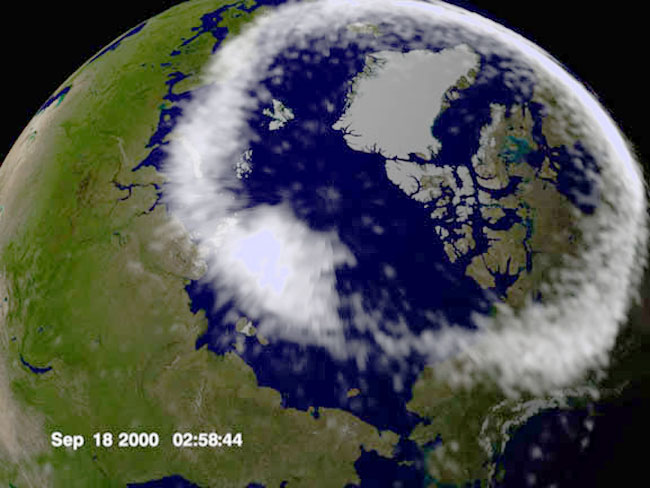
The atmosphere is rarely a static envelope. At its most fundamental level, it is a fluid governed by pressure differentials. Low-pressure areas, or cyclones, emerge when air diverges aloft, creating a vacuum that pulls air upward from the surface. This vertical motion is the engine of weather, driving the adiabatic cooling that forms clouds and dictates our daily experience of rain and wind. Whether through the synoptic-scale migration of Rossby waves or the localized thermal heating of deserts, these pressure systems act as the primary movers of the global climate, redistributing heat and moisture across the planet.
The atmosphere is a fluid governed by pressure differentials, acting as the primary engine for the redistribution of heat and moisture.
Clouds as Climate Architects
Clouds are not merely passive indicators of weather; they are active participants in the thermal regulation of the Earth. In the Southern Hemisphere, for instance, storm tracks are sustained by a self-reinforcing feedback loop. Clouds reflect incoming sunlight, creating a meridional gradient in surface heating that maintains storm activity even when solar insolation is uniform. This coupling between the ocean, the atmosphere, and cloud radiative effects demonstrates that the climate is a system of interlocking parts where the presence of a cloud can determine the strength of a storm thousands of miles away.
The Aerosol Variable
Human influence on this system is often mediated by aerosols—tiny particles that serve as the seeds for cloud formation. Ship tracks, first identified in the 1960s, provide a visible record of this process, where engine exhaust allows water vapor to condense into bright, reflective clouds. This phenomenon has prompted serious discussion about geoengineering, specifically the potential for spraying salt-aerosols into the air to artificially increase cloud albedo and mitigate global warming. Yet, understanding these populations is notoriously difficult. New frameworks like AeroMELD are now attempting to move beyond binned approximations, using machine learning to represent aerosol populations in a way that respects their physical structure and mixing states.
Clouds are not merely passive indicators of weather; they are active participants in the thermal regulation of the Earth.
Tracing the Invisible
Beyond the troposphere, the stratosphere also exerts an influence on our air quality. Stratospheric ozone intrusions can descend into the lower atmosphere, significantly altering ozone concentrations in regions as distant as Central and Eastern China. By using Lagrangian simulations and high-resolution tracing, researchers can now distinguish between the direct, daily impacts of these intrusions and the more efficient, monthly contributions of indirect pathways. These findings highlight how synoptic-scale circulations, such as Rossby waves, can bridge the gap between the upper atmosphere and the surface.
Refining the Model
To predict these complex interactions, we rely on numerical models that must balance computational efficiency with physical accuracy. Whether it is the Conformal Cubic Atmospheric Model (CCAM) downscaling global reanalysis data or hybrid algorithms like AIRTrans integrating radiative transfer with transfer learning, the goal remains the same: to reduce bias in temperature and precipitation forecasts. Even the most advanced telescopes must account for the atmosphere's turbulence, using lasers to create artificial guide stars that correct for blurring in real-time. As we refine our ability to simulate and even control these systems—through methods like sparse model predictive control—we are moving toward a more precise, if still humbling, understanding of the air above us.