Atmospheric Mechanics: A Study of Invisible Forces
From the chemistry of distant gas giants to the microscopic mechanics of ship exhaust, the atmosphere remains a fluid, elusive subject of study.
Measuring the Unseen
The challenge of atmospheric science often lies in the gap between theoretical models and the messy reality of observation. Instruments like the Geostationary Environmental Monitoring Spectrometer (GEMS) represent a leap in our ability to track pollutants like nitrogen dioxide and formaldehyde hourly. Yet, these satellite-based sensors require rigorous ground-truth validation. When researchers compare satellite data against ground-based stations like Pandora or MAX-DOAS, they frequently encounter discrepancies in retrieval processors and viewing geometries. Adjusting these parameters is not merely a matter of calibration; it is an attempt to reconcile the scale of space-based observation with the localized, granular reality of air quality on the ground. Similarly, the use of machine learning to parameterize turbulent fluxes—the exchange of momentum and heat between the surface and the air—shows that even our best physics-based models, such as COARE-3, can be improved upon by teaching algorithms to recognize the specific signatures of offshore environments.
The atmosphere is not a static backdrop but a dynamic system of shifting gradients and chemical reactions.
The Weight of Circulation
Weather patterns are rarely isolated events; they are the result of complex interactions between large-scale pressure systems and local topography. In the Sichuan Basin, for instance, persistent winter pollution is not just a failure of emission controls but a consequence of stagnant synoptic patterns. High-pressure ridges and low troughs act as physical barriers, trapping aerosols in a stable boundary layer. These conditions are further complicated by cloud-radiation interactions, where the presence of clouds reflects solar energy, cooling the surface and further inhibiting the vertical mixing that would otherwise disperse pollutants. Such patterns demonstrate how global phenomena, like the temperature fluctuations of El Niño or La Niña, can dictate the stability of regional air masses thousands of miles away, keeping arctic air at bay or ushering in sudden shifts in temperature.
Intervening in the Air
The human capacity to alter the atmosphere is both an accidental byproduct of industry and a deliberate subject of geoengineering research. Ship tracks—bright, narrow streaks of cloud formed by the condensation of water vapor around engine exhaust aerosols—serve as a visible reminder of how small-scale emissions can influence radiative balance. This mechanism has inspired proposals to spray salt-aerosol into the air to create artificial, sunlight-reflecting clouds as a defense against global warming. However, the consequences of such interventions are non-linear. Simulations of sulfate injection geoengineering, intended to balance rising temperatures, suggest that while global surface concentrations of particulate matter might decrease, the composition of that matter changes. A cooler environment can shift gas-phase organic precursors into the aerosol phase, creating new challenges for human health and ecosystem stability that are not immediately apparent in simple cooling models.
Beyond the Troposphere
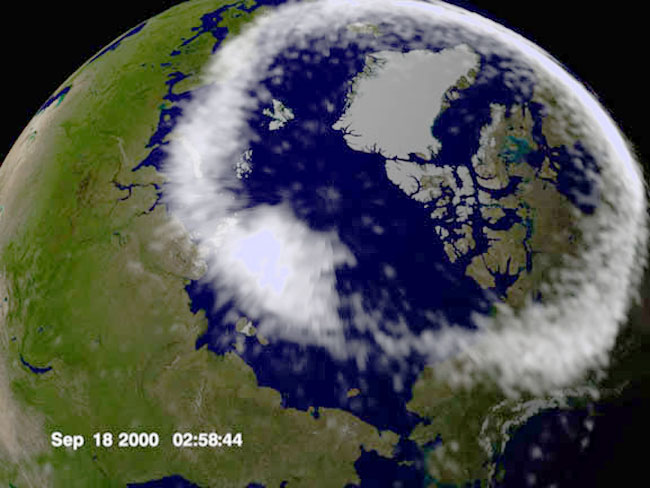
The study of atmospheres is not confined to the lowest, dust-filled layer of our own planet. High above the Earth, the magnetosphere acts as a shield, though it is occasionally breached, allowing solar protons to interact with the ionosphere and create auroral displays. This same drive to understand atmospheric composition now extends to the cold, distant atmospheres of exoplanets. Using the James Webb Space Telescope, researchers have successfully detected ammonia in the atmosphere of the giant planet GJ 504 b, a finding that helps clarify the temperature and gravity of worlds far beyond our reach. Conversely, the search for helium absorption in temperate planets like LHS 1140 b highlights the difficulty of distinguishing between planetary atmospheric escape and the inherent variability of a host star. Whether observing the twilight edge of Earth from the International Space Station or the infrared spectrum of a brown dwarf, the science remains one of interpreting light to map the invisible gases that define a planet's character.
Atmospheric science extends beyond our own sky, seeking the chemical signatures of distant worlds.