Atmospheric Currents Measured
From the microscopic physics of ship exhaust to the grand circulation of the stratosphere, our understanding of the air is defined by the tools we build to measure its invisible currents.
The View from Above
The Geostationary Environmental Monitoring Spectrometer, or GEMS, marks a shift in how we monitor the air. By sitting in a fixed position relative to the Earth, it provides hourly snapshots of nitrogen dioxide and formaldehyde across Asia. Yet, the leap from raw spectral data to reliable air quality metrics is fraught with technical friction. Researchers have found that even the most sophisticated satellite instruments require constant calibration against ground-based sensors like Pandora and MAX-DOAS. These ground stations act as the necessary truth-tellers, revealing that satellite retrievals often overestimate pollutant levels, particularly during the winter months when the atmosphere is at its most complex.
Refining these measurements requires more than just better hardware; it demands smarter algorithms. Recent efforts to improve tropospheric nitrogen dioxide retrieval have moved away from legacy methods, opting instead for dynamic stratospheric estimation. By utilizing advanced cloud-recognition software and high-resolution atmospheric models, scientists are learning to strip away the interference of the upper atmosphere. This process allows for a clearer view of the boundary layer, where human-made pollutants actually reside, though the challenge of accounting for surface reflectance and small-scale variations remains a persistent hurdle.
The precision of our gaze from orbit depends entirely on how well we can distinguish the chemical signature of the ground from the noise of the atmosphere.
Clouds as Curtains
The interaction between aerosols and radiation is a delicate feedback loop that can dictate the climate of an entire basin. In the Sichuan Basin, for instance, specific synoptic patterns—such as the low trough or east-high-west-low pressure systems—act as traps for particulate matter. When these systems introduce humid air, they trigger the formation of clouds that do more than just obscure the sky; they actively inhibit the sun's ability to warm the surface. This cloud-radiation interaction effectively stabilizes the boundary layer, preventing the vertical mixing that would otherwise disperse pollutants.
This phenomenon is not merely a natural curiosity but a demonstration of how aerosols can alter the physical structure of the air. We see a similar, if more localized, effect in ship tracks. When engine exhaust provides a surplus of aerosols, water vapor condenses around them to form bright, reflective clouds. These streaks, first spotted by satellites in the 1960s, are essentially human-made mirrors. The prospect of scaling this effect—using buoys to spray salt aerosols into the air to create artificial cloud cover—highlights the growing temptation to treat the atmosphere as a controllable machine.
The Geometry of Interference
Our relationship with the atmosphere is often one of overcoming its interference. Astronomers, for example, have turned the atmosphere's tendency to scatter light into a diagnostic tool. At the Paranal Observatory, laser beams are projected into the sky to excite sodium atoms in the upper atmosphere, creating artificial guide stars. By measuring how these beams fluctuate, telescopes can adjust their mirrors in real-time to cancel out the blurring effects of the lower atmosphere. It is a sophisticated admission that the air is a medium of constant, chaotic motion.
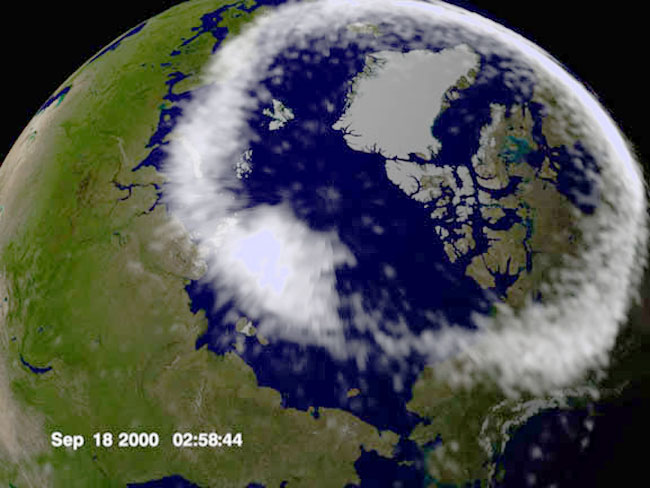
This same medium is also the stage for the proton aurora, a display triggered when solar activity finds a crack in the Earth's magnetic shield. While most solar wind is deflected, these rare events allow protons to flow directly into the ionosphere. These interactions serve as a reminder that the atmosphere is not a closed system but an extension of the space environment, constantly bombarded by particles that define the boundaries of our planet's protection.
We have learned to treat the atmosphere as a lens that must be corrected, using lasers to map the turbulence that blurs our view of the stars.
The Limits of Prediction
As we attempt to model the future of the climate, we are increasingly reliant on high-resolution inventories and machine learning. New global datasets, derived from satellite fire-spot monitoring, now track biomass burning with unprecedented detail, quantifying the millions of tons of carbon and particulate matter released annually. Yet, even with better data, our models struggle to capture the full complexity of the atmosphere. Experiments with counterfactual seasonal hindcasts have shown that even our best climate models often fail to reproduce decadal trends, suggesting that we are missing key feedbacks in the coupled atmosphere-ocean system.
This uncertainty extends to the proposed solutions for a warming planet. Simulations of sulfate injection geoengineering show that while such measures might reduce global surface particulate matter by slowing wind speeds and increasing soil moisture, they also shift the composition of the air in unpredictable ways. Similarly, attempts to use machine learning to parameterize turbulent fluxes have shown that while neural networks can outperform traditional physics-based models in specific environments, they are often brittle when applied outside their training data. We are building powerful tools to describe the air, but the atmosphere remains a system that frequently resists our attempts to simplify it.