Cosmic Bookkeeping: Mapping Distant Light
From the chemical signatures of dust disks to the transit signals of nearby exoplanets, modern astronomy is a rigorous exercise in bookkeeping the cosmos.
The Statistical Baseline
Modern astronomy functions as a vast, collaborative bookkeeping exercise. We are no longer merely observers of the night sky; we are catalogers of its minute fluctuations. The Gaia mission, for instance, has provided a baseline of stellar variability that, while sparse in its individual snapshots, offers a statistical breadth that allows researchers to identify pulsation patterns across tens of thousands of stars. By pairing this long-term, low-cadence data with the high-precision, short-term observations from the Transiting Exoplanet Survey Satellite (TESS), astronomers are refining their understanding of stellar physics. This synthesis confirms that the classification of variable stars is remarkably robust, even when the underlying data points are separated by years.
We are no longer merely observers of the night sky; we are catalogers of its minute fluctuations.
Chemical Fingerprints
Beyond the stars themselves, the environments in which they form offer a different kind of record. In the inner disk of the young star PDS 70, researchers have used infrared spectroscopy to map the mineralogy of dust. By analyzing the subtle shifts in silicate bands, they have identified a reservoir of warm, amorphous dust that changes over time. This variability suggests that the regions where rocky planets might eventually coalesce are far from static. Similarly, studies of protostellar envelopes using the James Webb Space Telescope have allowed for the measurement of carbon isotope ratios in solid ice, providing a chemical fingerprint that tracks the evolution of material from stellar nurseries to the potential sites of future planetary systems.
The regions where rocky planets might eventually coalesce are far from static.
Elements of Evolution
The broader chemical composition of the local universe is similarly being recalibrated. By examining the abundance of alpha-elements—such as neon, sulfur, and argon—in star-forming regions, researchers are testing the limits of our current evolutionary models. These elements serve as the building blocks of galaxies, yet their ratios often defy simple categorization. The dispersion observed in these abundance patterns suggests that the interplay between metallicity, dust depletion, and the specific ionisation correction factors remains a complex puzzle. It is a reminder that the chemical history of the cosmos is written in the light of ionized gas, but the ink is often difficult to read.
The Unpredictable Sky
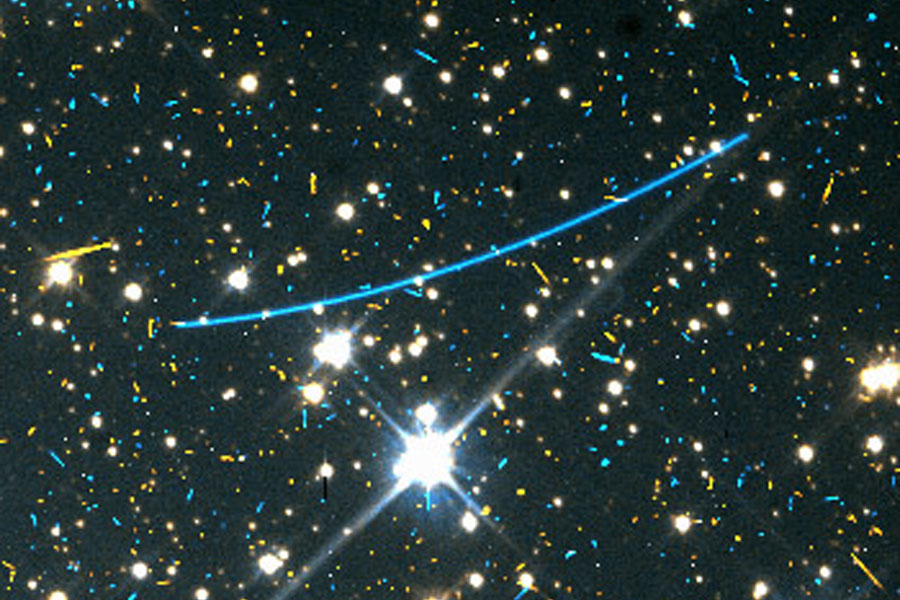
While the slow, steady work of chemical and stellar classification continues, the sky remains a place of sudden, violent change. Supernovae in nearby galaxies like M51 serve as reminders that even well-studied systems can surprise us with their frequency of stellar death. These events, unpredictable and fleeting, require the combined efforts of professional observatories and amateur enthusiasts to fill the gaps in our temporal coverage. Meanwhile, the solar system itself remains a target of constant, if smaller, bombardment. Asteroids, many yet to be discovered, pass within the orbit of the Moon with unsettling regularity, while comets like Tsuchinshan-ATLAS offer brief, spectacular displays before disappearing into the dark, perhaps never to return to our vicinity.
The Crowded Neighborhood
Ultimately, our perspective is defined by distance and the limits of our own biology. The Andromeda galaxy, visible to the unaided eye, presents us with light that has traveled for two and a half million years, a relic of a time long before our own. Yet, closer to home, we are finding an increasingly crowded neighborhood. Exoplanets like GJ 367 b and GJ 806 b, orbiting red dwarfs just dozens of light-years away, reveal worlds that are hot, fast, and fundamentally different from our own. Whether we are looking at the ancient photons of a neighboring galaxy or the transit signal of a planet that completes its year in eight hours, we are engaged in the same task: mapping the scale of our existence against the backdrop of an indifferent, yet legible, universe.